


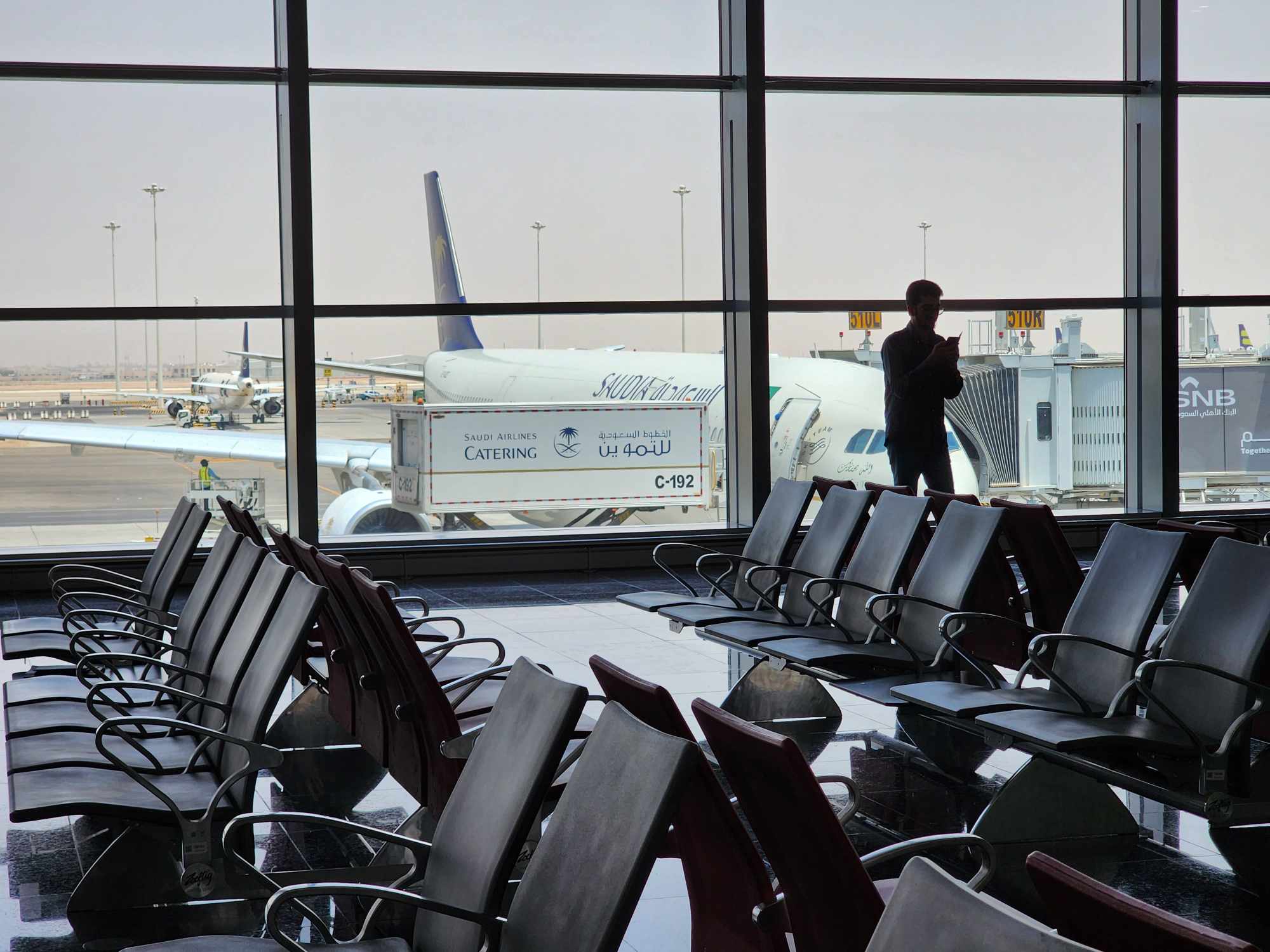
Travellers flying with Saudia and other carriers faced disruption on Saturday and may continue to do so as a series of military actions in the Middle Eastseries of military actions in the Middle East led to widespread flight cancellations and airspace closures.
In a travel advisory posted on the airline’s website on Saturday, Saudia said it had cancelled flights to and from Amman, Kuwait, Dubai, Abu Dhabi, Doha, Bahrain, Moscow and Peshawar until at least 23:59GMT on 2 March 2026 in response to the evolving situation in the region and the closure of airspace that many carriers now cite as the primary reason for flight suspensions.
The airline said the decisions were taken “in line with aviation safety and security standards” and that its Emergency Coordination Center was monitoring developments in coordination with relevant authorities. Passengers were urged to verify the status of their flights before travelling to the airport and to check their booking details for updates.
The cancellations come after airspace closures occurred following military strikes and counterstrikes involving Iran, the United States and Israel, which have led several countries in the region to restrict or close their skies to civilian traffic.
Airspace closures and flight disruptions
Regional airlines and global carriers have announced suspensions, delays or rerouting of flights to and from major Middle Eastern hubs in recent days. In addition to Saudia’s cancellations, Emirates said it had temporarily halted operations out of Dubai after airspace closures, while Air Arabia reported cancellations and delays affecting its services. The carrier added that customers booked on affected flights would be notified directly and that further updates would be issued as the situation develops.
Changes are not limited to regional airlines. International carriers have also altered schedules amid the uncertainty. According to aviation analytics data reported by Reuters, nearly 40 per cent of flights to Israel and almost seven per cent of flights to the wider Middle East were cancelled on Saturday, with numerous airspace closures reported across Iran, Iraq, Qatar, the United Arab Emirates, Bahrain, Kuwait and Jordan.
These closures have affected one of the world’s busiest aviation corridors, which normally links Europe, the Gulf and Asia. Routes that typically pass over parts of the region are now being diverted or suspended, leading to longer travel times and operational challenges for airlines.
Passenger impact and safety focus
Passengers affected by cancellations have been advised by airlines to check flight status closely and to contact airlines directly for rebooking, refunds or alternative arrangements.





Comments (0)