


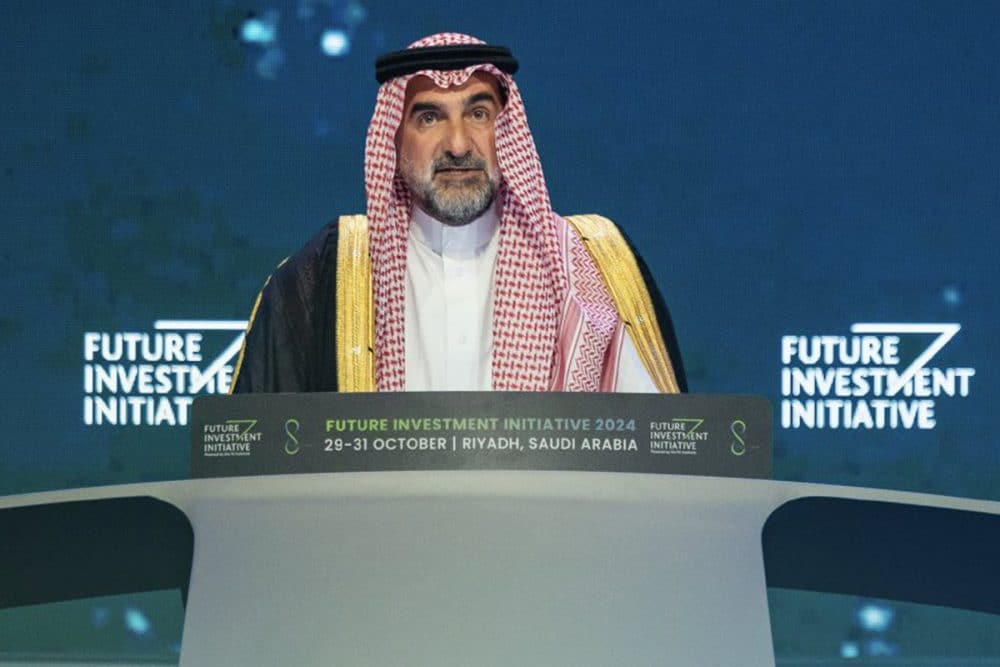
Saudi Arabia’s Public Investment Fund formally approved its 2026-2030 strategy on Wednesday, with the board meeting chaired by Crown Prince Mohammed bin Salman. The new five-year roadmap marks the most significant strategic update to the world’s fifth-largest sovereign wealth fund since Vision 2030 launched a decade ago, and maps out a more focused, returns-driven approach to building the Kingdom’s post-oil economy.
The strategy had been in development since late 2024 and was previewed to key investors at the FII Priority conference in Miami in late March. Its formal approval this week draws a line under a period of internal review and signals that PIF is ready to move into its next phase of capital deployment with a clearer set of priorities.
What the Strategy Prioritises
The new roadmap concentrates PIF’s investment energy around a tighter set of sectors: artificial intelligence and digital infrastructure, industry and manufacturing, minerals and mining, and tourism. These represent a deliberate shift toward sectors that generate financial returns alongside economic diversification, rather than the broader, simultaneously-running programme of construction that defined the first Vision 2030 decade.
Artificial intelligence sits at the top of the new priority list. PIF’s AI subsidiary HUMAIN, launched in 2025, has become the fund’s primary vehicle for technology investment, with the Kingdom targeting between three and six gigawatts of AI computing capacity as part of a broader push to establish Saudi Arabia as a regional hub for digital infrastructure. The strategic logic is partly economic and partly structural: data centres require domestically generated electricity, can be built with largely domestic inputs, and generate returns that are not dependent on open maritime trade routes.
The industrial and minerals push connects to a longer-running effort to develop Saudi Arabia’s considerable non-oil resource base. The Kingdom holds significant deposits of phosphate, bauxite, gold, and rare earth elements, most of them underexplored. PIF’s investment in the minerals sector under the new strategy is designed to capture value from these resources directly rather than exporting them as raw materials.
Tourism remains a central pillar, anchored by the existing Red Sea and Amaala development programmes and supported by the entertainment and events infrastructure that has driven Saudi Arabia’s rapid visitor growth. The 122 million visitors recorded in 2025 and the SR160 billion in inbound spending that year provide the economic justification for continued investment in this sector.
Expo 2030 and the World Cup at the Centre
Two fixed external deadlines organise the new strategy’s domestic investment priorities: Expo 2030 Riyadh and the 2034 FIFA World Cup. Both carry international reputational commitments that make them non-negotiable, and both have been elevated to the top of the capital allocation queue.
People familiar with the investment pipeline have noted that infrastructure contracts of significance are being prioritised according to their connection to these two events. Transport, mobility, energy, and entertainment infrastructure tied to Expo or World Cup timelines are receiving priority consideration, while projects without those anchors face more rigorous scrutiny. The $7.8 billion Expo 2030 budget remains ring-fenced. Stadium and associated infrastructure for the 2034 World Cup has similarly been protected from the broader spending review.
This approach reflects a maturation in how PIF is thinking about its portfolio. Both events have fixed, visible, internationally watched delivery dates, which creates accountability that is different in kind from projects with aspirational timelines. Building around them gives the new strategy a credible timetable that investors and partners can plan against.
A More Returns-Focused Fund
PIF Governor Yasir Al-Rumayyan has been consistent in describing the new strategy as aimed at making the fund more efficient and returns-driven. The shift reflects a broader evolution in sovereign wealth management: the early phase of Vision 2030, characterised by rapid capital deployment across a wide front, has given way to a more disciplined approach that asks harder questions about financial return alongside economic impact.
PIF is also expected to cut some capital spending under the new strategy. The recalibration follows a comprehensive internal review of the giga-project portfolio that identified projects where costs had escalated significantly relative to original estimates. Some projects have been scaled back, others restructured, and timelines adjusted to reflect current market conditions and fiscal realities.
The fund’s assets under management stand at approximately $930 billion, making it the fifth-largest sovereign wealth fund globally. PIF is targeting assets of $2 to $3 trillion by 2030, a target that requires both strong investment returns and continued capital inflows. The path runs through returns from the global portfolio, continued capital transfers, and the monetisation of domestic projects as Saudi Arabia’s non-oil economy matures.
The Broader Context
The 2026-2030 strategy is being released at a moment when Saudi Arabia’s economic transformation is both more advanced and more tested than at any previous point. The Kingdom’s non-oil sector now accounts for 55.6 percent of real GDP, up from 45.4 percent when Vision 2030 launched, and the economy grew 4.5 percent in 2025. These are not trivial achievements. The diversification that Vision 2030 was designed to accelerate has made measurable progress.
At the same time, the regional environment of 2026 is more demanding than the one in which the original strategy was designed. PIF’s response, as reflected in the new strategy, is to concentrate capital on the investments most likely to generate returns and deliver against fixed commitments, while maintaining the long-term ambition that has defined the Kingdom’s economic programme for a decade.


Comments (0)