


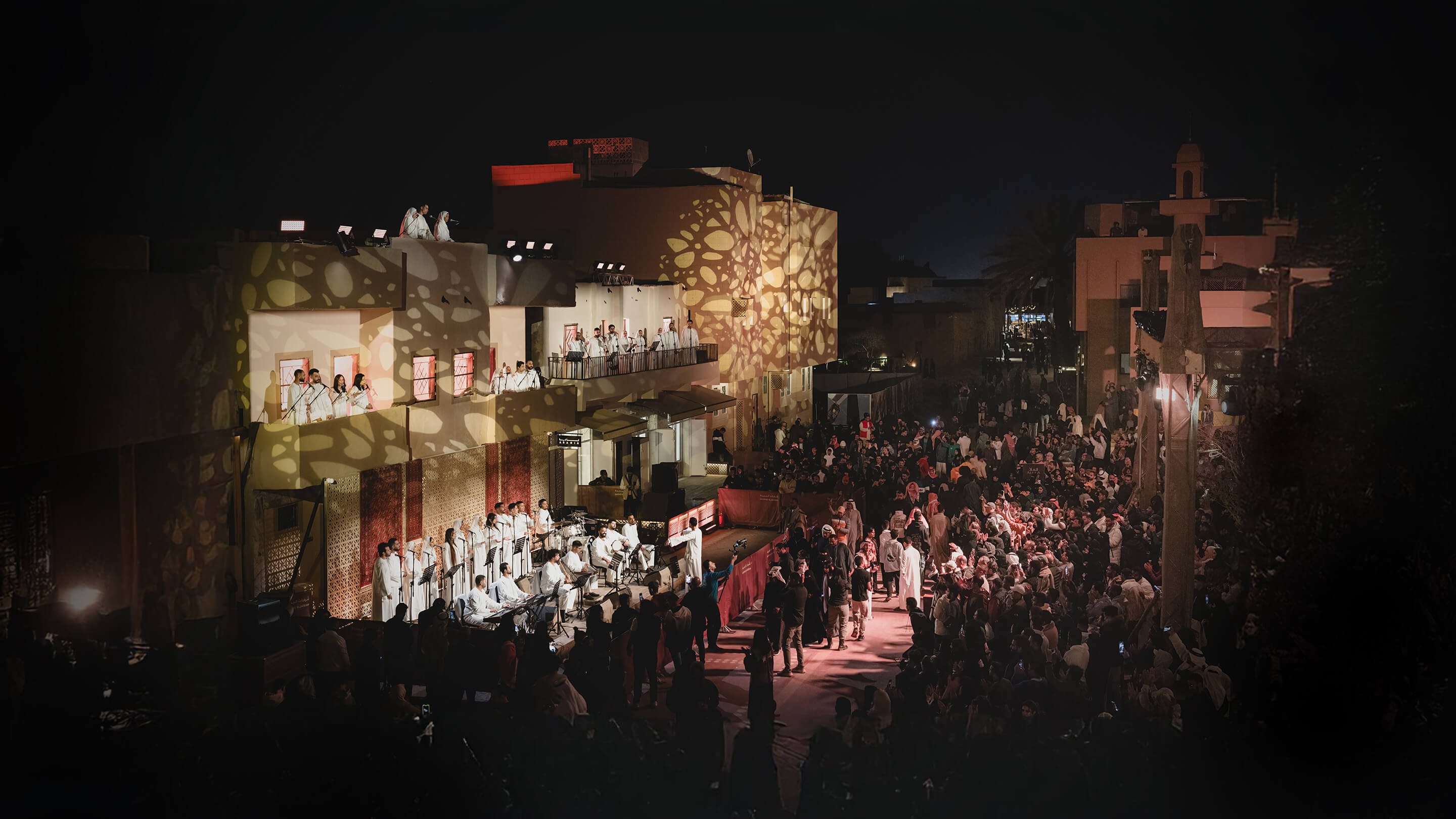
In most places, winter announces itself with cold. In AlUla, it arrives with gathering.
From 18 December 2025 until 10 January 2026, the ancient oasis city in northwest Saudi Arabia will once again mark the winter season through Winter at Tantora, a cultural festival rooted not in spectacle but in rhythm, memory, and place. As the desert air cools and evenings lengthen, AlUla will turn inward and outward at the same time, opening its historic streets, public squares, and heritage sites to a season of music, art, food, and shared experience.
The festival takes its name from the Tantora sundial, a centuries-old stone marker in AlUla’s Old Town that once guided farmers through planting cycles and seasonal change. Winter at Tantora draws directly from that history, treating winter not as a date on a calendar but as a moment of collective pause.
Rather than unfolding in a single venue, the festival will be dispersed across the city, inviting visitors to move slowly through AlUla’s layered landscapes. Much of it will take place after sunset, when sound carries differently and the desert seems to listen.
From Old Town Art Walks to Carnivals
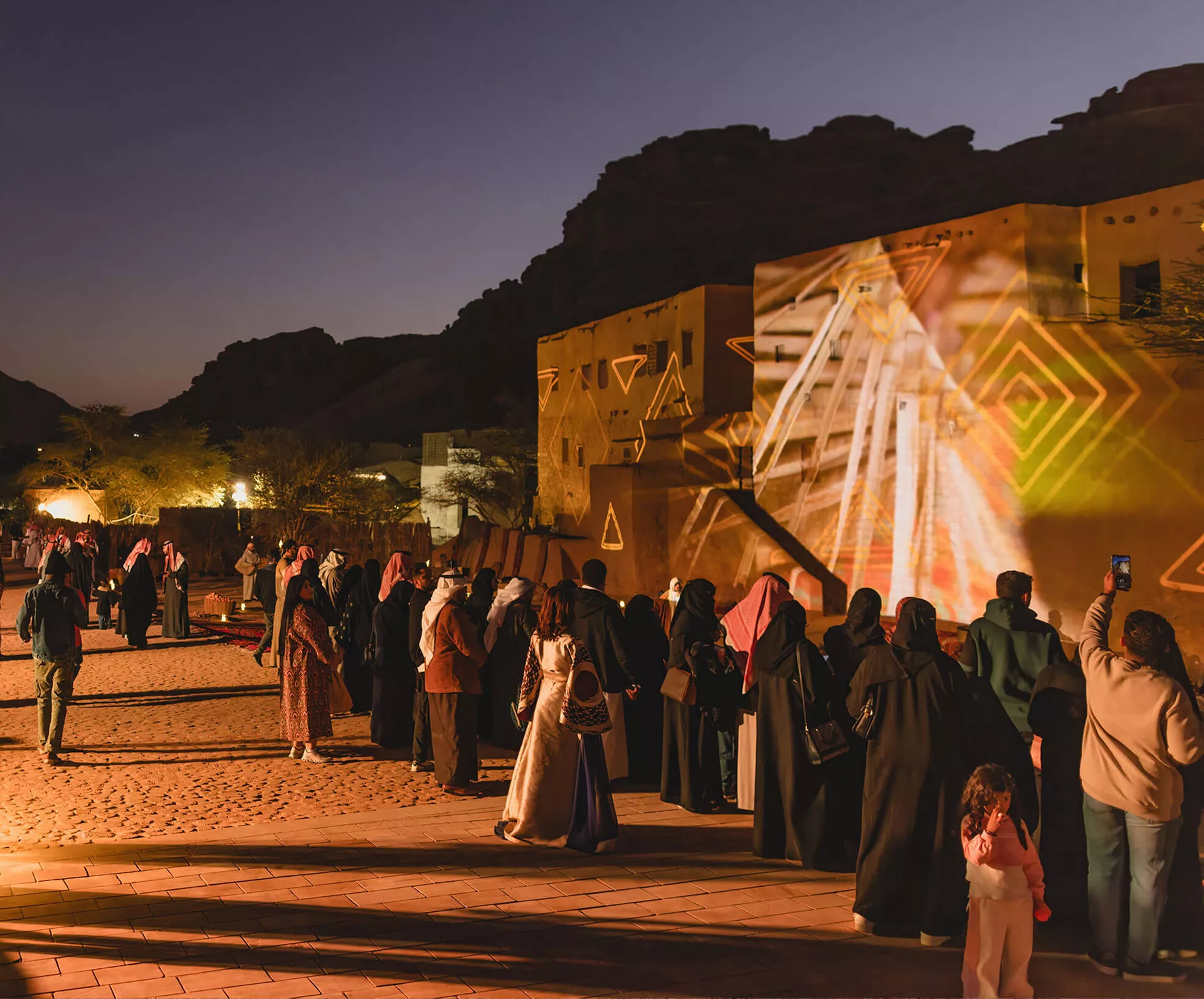
One of the festival’s recurring anchors, Old Town Nights, will see AlUla’s historic streets come alive after dark. Lantern-lit alleys will host live performances, pop-up food experiences, and cultural activations that encourage wandering rather than watching. There will be no prescribed route and no fixed audience. Visitors will drift between music, conversation, and quiet corners, experiencing the Old Town as a living space rather than a preserved site.
Music will also rise vertically through Shorfat Tantora, a series of performances staged from balconies overlooking the AlJadidah Arts District. Musicians will perform above the streets, their sound cascading into the open air as audiences gather below. Without formal stages or barriers, the performances will feel closer to shared moments than concerts, shaped as much by architecture and atmosphere as by the music itself.
Visual art will be embedded directly into the urban fabric through the Old Town Wall Art Walk, which will transform historic facades into sites of contemporary expression. Murals and installations will respond to AlUla’s textures, histories, and stories, encouraging visitors to engage with art as part of their movement through the city rather than as isolated destinations.
Food will take on a similarly narrative role. The Old Town Culinary Voyage will offer curated dining experiences set within restored heritage spaces, blending regional ingredients with modern interpretations. Rather than focusing on novelty, the emphasis will be on seasonality, place, and the long-standing relationship between AlUla and cultivation, hospitality, and trade.
For families and younger audiences, the festival will extend to spaces like AlManshiyah Carnival, where games, performances, and interactive experiences will bring a more playful energy to the season. Even here, the focus will remain on participation and community, reinforcing the festival’s broader ethos of togetherness.
What distinguishes Winter at Tantora is its refusal to overwhelm. Events are designed to be encountered organically, often discovered rather than announced. There is space for stillness, for repetition, for returning to the same street or square at different times of day. The desert landscape is not a backdrop but an active presence, shaping how light fades, how sound travels, how people gather.
As Saudi Arabia’s cultural calendar continues to expand, Winter at Tantora offers a quieter proposition. It suggests that culture does not need to be compressed into headline moments to be meaningful. Instead, it can unfold slowly, grounded in history and attentive to place.

Comments (0)