

Saudi Arabia has strategically shifted its focus to boxing as part of its efforts to reduce reliance on oil revenues and cultivate sectors such as tourism, entertainment, and sport. Under Vision 2030, global sporting events are positioned as key drivers of economic diversification.
With substantial financial backing from the Public Investment Fund (PIF), the Kingdom has secured historic boxing matchups and seamlessly integrated them into initiatives like Riyadh Season.
Structural Drivers of Boxing’s Boom
Saudi Arabia’s Vision 2030 strategy aims to enhance non-oil revenue, expand tourism, create private-sector jobs, and modernize the Kingdom’s global image. Sport plays a pivotal role in this strategy, with ambitions to attract over 100 million visitors annually by 2030.
Major sporting events, particularly in boxing, serve as catalysts for this goal, generating global broadcast exposure while stimulating sectors like hospitality and aviation. As an event-focused sport, boxing allows for rapid entry into the international sporting landscape without the sustained commitments required by traditional leagues.
Financial leverage is another critical driver. Saudi Arabia has attracted top-tier fighters by offering prize money that outstrip those found in other regions. This financial backing has facilitated cross-promotional cooperation, bringing long-anticipated fights to life.
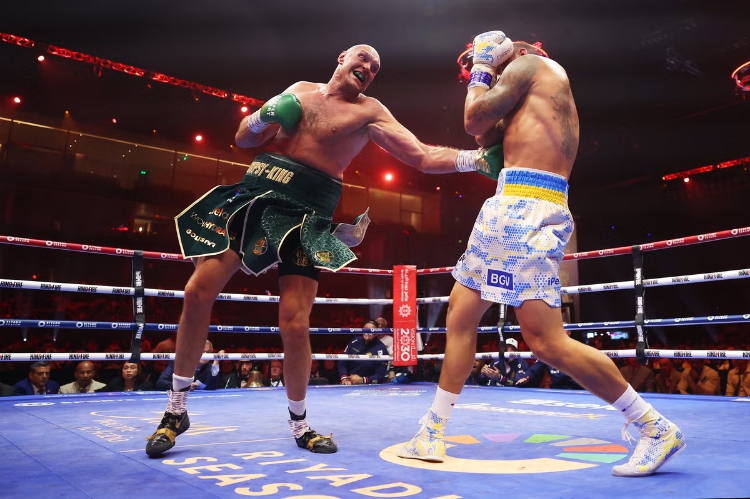
For instance, the undisputed heavyweight fight between Tyson Fury and Oleksandr Usyk ultimately took place at Riyadh’s Kingdom Arena on 18 May 2024 (after earlier postponements) exemplifying how Saudi financial backing helped secure and finalize a matchup that had been stalled in other markets.
Events such as Tyson Fury’s match against Francis Ngannou held on 28 October 2023 at Kingdom Arena in Riyadh further illustrate how Saudi Arabia’s investments can attract significant global attention.
Saudi infrastructure has also seen considerable investment. Purpose-built venues like the Kingdom Arena in Riyadh and temporary setups such as the Diriyah Arena for the Joshua-Ruiz rematch demonstrate the Kingdom’s commitment to hosting world-class events.
The Role of the Public Investment Fund (PIF)
The PIF plays a crucial role in Saudi Arabia’s boxing strategy, serving as the primary financial engine behind Vision 2030 projects. With assets exceeding USD 700 billion (SAR 2 trillion), PIF has invested heavily in boxing and across global sports, establishing partnerships with significant promotion entities.
Currently, discussions are underway to establish a Saudi Unified Boxing League, aimed at addressing the existing fragmentation in professional boxing. This proposed league, reportedly valued in the billions of dollars, seeks to standardize competition structures and enhance commercial stability across the sport.
It is a Saudi-backed initiative to create a unified professional boxing organization that would bring top fighters together under a centralized, merit-based system, modeled in part on the organizational approach of the Ultimate Fighting Championship (UFC).
Furthermore, partnerships with entities such as TKO Group Holdings, the parent company of the Ultimate Fighting Championship (UFC) and World Wrestling Entertainment (WWE), signal a strategic shift toward global promotional leadership, moving beyond Saudi Arabia’s previous role as solely an event host.
Therefore, the integration of boxing into the broader cultural context of events like Riyadh Season fosters extended visitor engagement, enhancing per capita spending and further fueling economic growth.



Comments (0)