


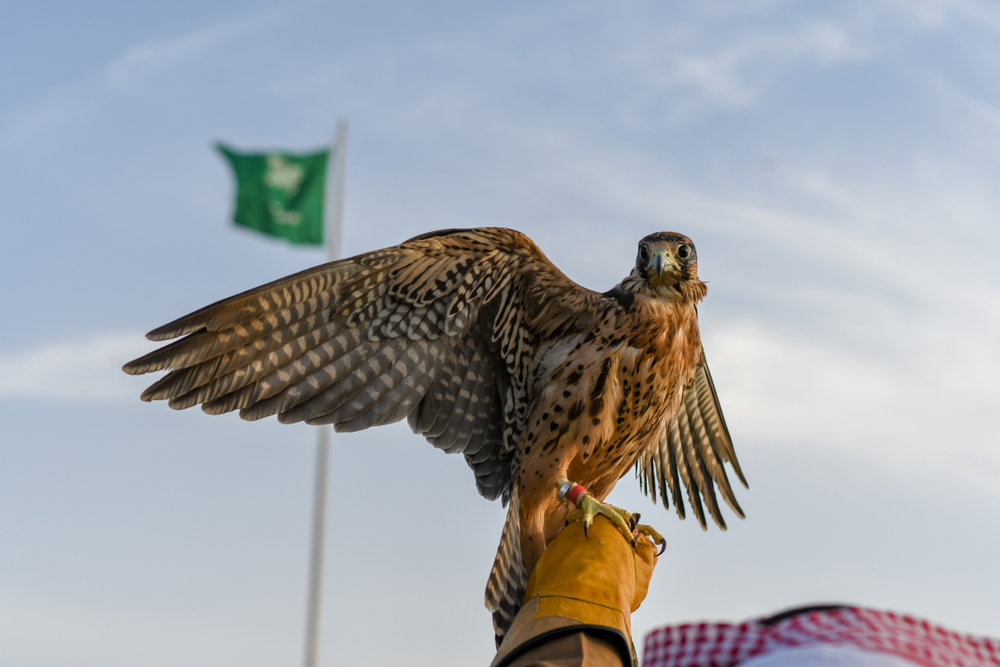
A Saudi research team from King Saud University (KSU) announced on 7 April that it has reached a new scientific milestone by completing whole-genome sequencing for two of the Kingdom’s most prominent native falcon species.
The project produced a genetic resource for the Lanner Falcon (Falco biarmicus) and the Barbary Falcon (Falco peregrinus pelegrinoides), with the work led by Associate Professor of Ecology and Molecular Epidemiology at KSU’s College of Science, Abdulwahid bin Fahd Al-Rifaie.
The team used advanced ‘PacBio sequencing technology, including the biotechnology company’s PacBio HiFi methods’, which are used to read long DNA strands accurately in real time to produce high-quality whole-genome data for their analysis.
The study is described as the first of its kind in Saudi Arabia for these two falcon species which demonstrates a growing capacity to apply sophisticated genomic tools to wildlife research.
The results were published in the international, peer-reviewed journal G3: Genes | Genomes | Genetics, reflecting the project’s scientific contribution to global efforts to map biological genomes.
Al-Rifaie highlighted that whole-genome sequencing offers a precise way to understand the genetic structure of falcons and to compare patterns of genetic diversity across individuals and species.
The team noted that such insights can be used to refine breeding programs, monitor hybridization, and support scientific studies related to genetic or hereditary diseases in birds of prey.
Importantly, the project also connects scientific progress with heritage. Falconry is deeply rooted in Saudi culture, and the project was described as inspired by the state’s commitment to preserving falcons as both cultural and environmental symbols.
The researchers further stated that the work aligns with national strategies related to environmental management and biodiversity, reinforcing the idea that cultural identity and ecological sustainability can advance together through modern science.





Comments (0)