


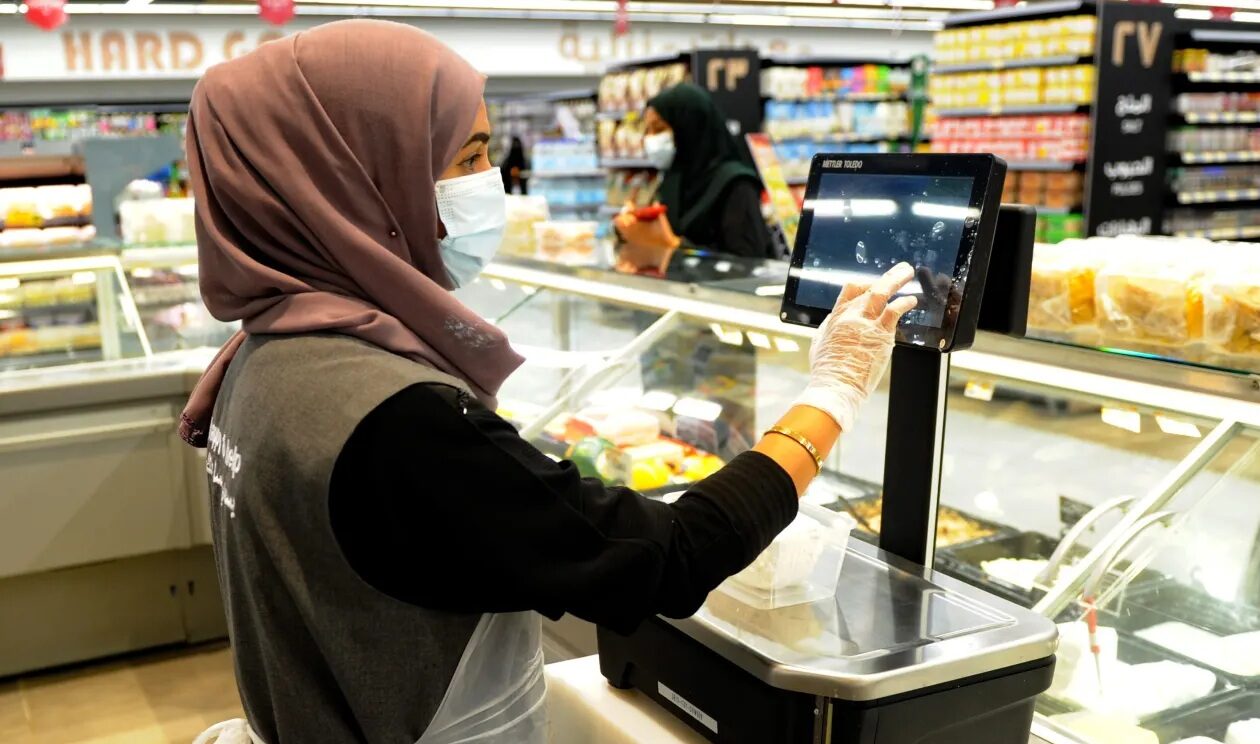
Modern women in Saudi Arabia are leading, participating, and increasingly asserting their presence in the workforce, with the latest official statistics showing female labor force participation climbing to 36.2 percent in the third quarter of 2024, a testament to years of policy reform under Vision 2030.
The latest Labor Market Bulletin from the General Authority for Statistics (GASTAT) indicates that this figure represents a 0.8‑percentage‑point increase over the prior quarter, pushing women’s participation to heights not seen in the Kingdom’s modern history.
The bulletin also shows that the employment‑to‑population ratio for Saudi women climbed to 31.3 percent, an uptick of 0.5 percentage points from the quarter before, while participation among young Saudi women aged 15 to 24 rose to 18 percent.
For decades, Saudi Arabia’s labor force was heavily reliant on public employment and a labor imbalance driven by a large expatriate workforce. Under Vision 2030, the Kingdom has pursued Saudization policies, incentivizing the hiring of Saudi nationals and setting quotas that favor local employment, which, according to the International Monetary Fund (IMF), have contributed to rising Saudi female employment and lower female unemployment.
Additionally, Saudi policymakers have fought to diversify the economy away from oil and large public‑sector employment, as part of Vision 2030, which aimed to bring more Saudi citizens, especially women, into productive private‑sector roles.
Higher educational attainment among women, with female university enrollment exceeding that of men, and a gradual loosening of legal and cultural barriers that historically constrained women’s economic participation, have also contributed to women’s growing participation in the labor force. Under the guidance of Vision 2030, independent travel rights, the easing of male guardianship rules, and expanded protections against workplace harassment played a part in the shift.
While supportive workplace policies, such as access to childcare, including the Child Hospitality Support Program (Qurrah) initiative, help women, access to such services remains uneven, particularly outside major urban centers like Riyadh and Jeddah. According to 2025 research by Emirates College for Advanced Education, women across the Gulf often face slower promotion tracks, wage gaps, and limited representation in senior leadership. Additionally, in smaller cities and rural regions, job diversity remains more limited, and cultural expectations may still influence women’s employment choices.
Nonetheless, the steady rise in participation reflects meaningful progress and stands as both a barometer of reform and a driver of future growth. With sustained policy focus and social evolution, the Kingdom is set to undergo further transformation, redefining women’s roles beyond traditional boundaries.
Comments (0)