


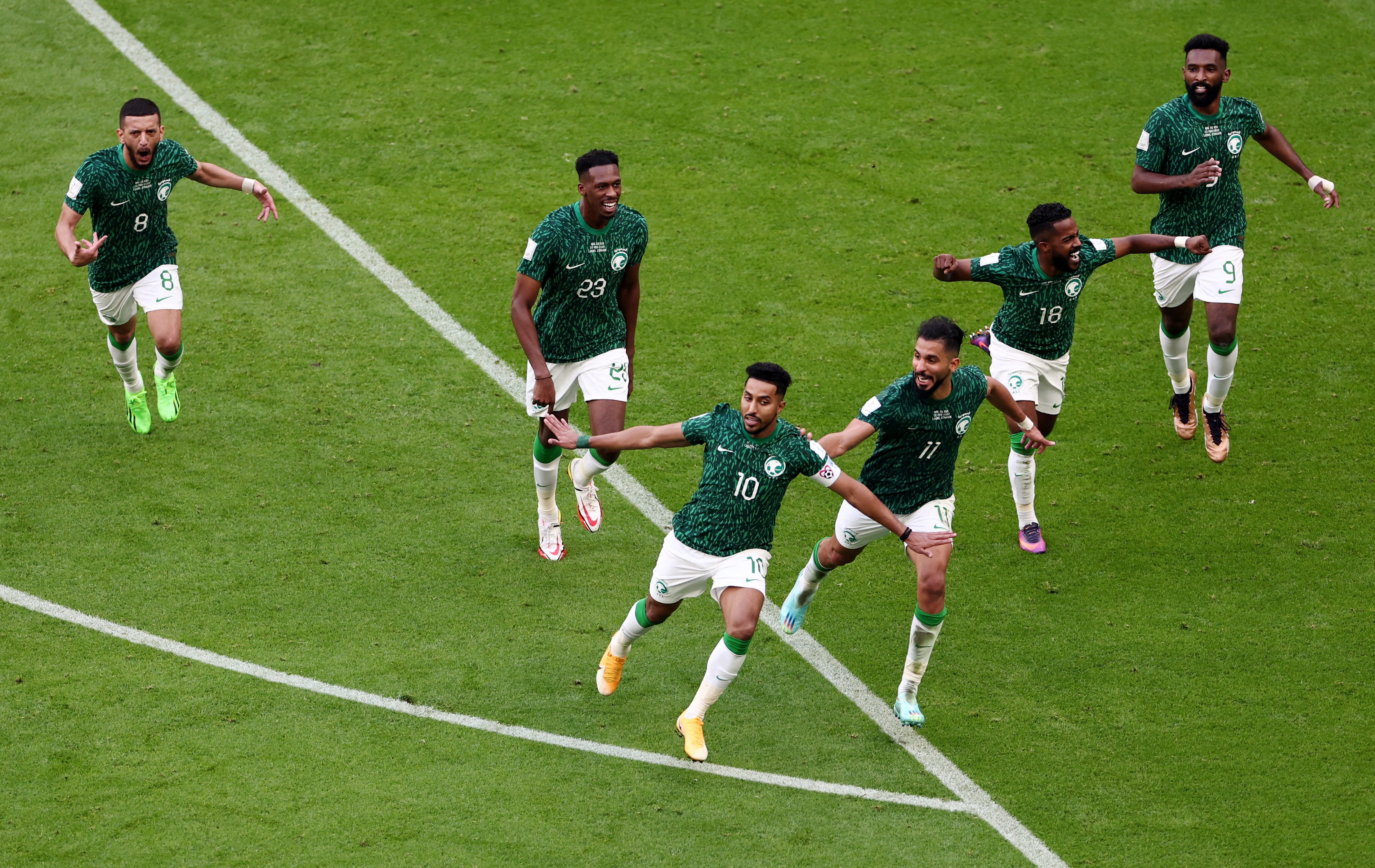
Saudi Arabia’s national team has a rich World Cup history that includes periods of qualification, absence, and rebuilding.
Across six Fédération Internationale de Football Association (FIFA) World Cup appearances, the Green Falcons have played nineteen matches, winning four, drawing two, and losing thirteen, while scoring fourteen goals and conceding forty-four.
The Kingdom’s World Cup story began in 1994 in the United States, when Saudi Arabia qualified for the first time under Argentine coach Jorge Solari. Drawn into a challenging group alongside the Netherlands, Morocco, and Belgium, the team faced immediate adversity.
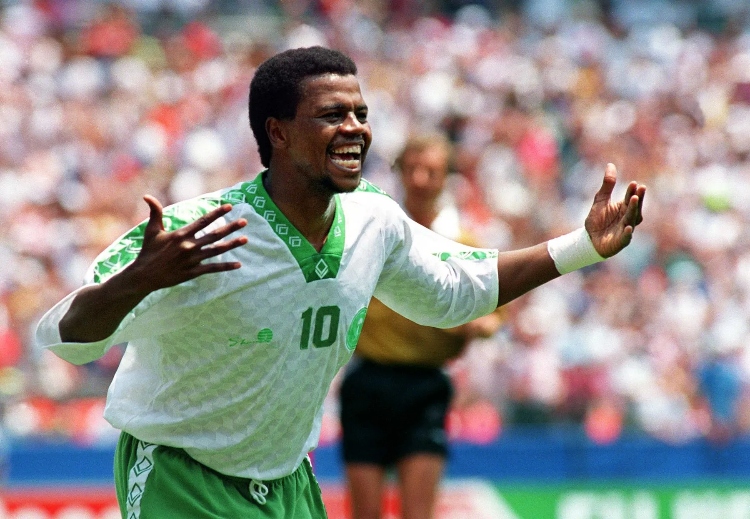
Saudi Arabia lost 2–1 to the Netherlands in its opening match, but responded with resilience by defeating Morocco 2–1 in its second game and then stunning Belgium 1–0 in the third.
That victory included one of the tournament’s most iconic goals: Saeed Al-Owairan’s winner against Belgium, scored in the fifth minute. Saudi Arabia’s momentum carried it into the Round of 16, where it faced Sweden and ultimately exited after a 3–1 defeat, with Fahad Al-Ghesheyan scoring for the Kingdom.
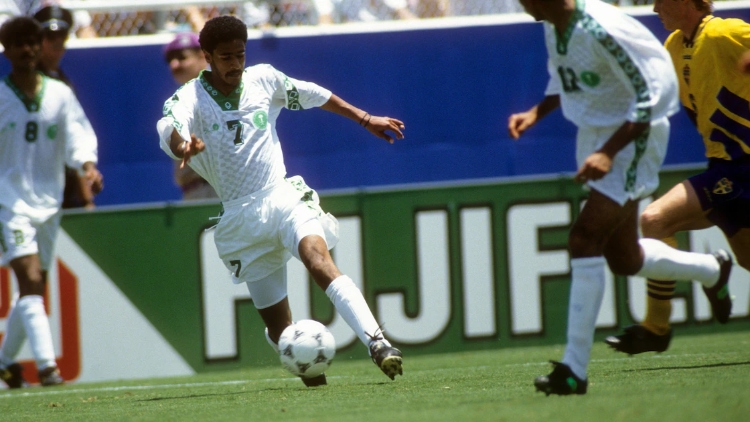
Even so, reaching the knockout stage on debut remains Saudi football’s best World Cup achievement, and the 1994 squad is widely remembered as the greatest generation in the nation’s football history.
That debut did more than produce results as it helped reshape international perception. Players such as Mohamed Al-Deayea, Sami Al-Jaber, Fuad Anwar, and Saeed Al-Owairan became national icons, and their performance demonstrated that an Asian team could challenge established football nations on the sport’s biggest stage.
The match-winning character of that generation also left a legacy that has continued to influence Saudi football’s identity: competitiveness, belief under pressure, and the ability to turn key moments into football history.
Saudi Arabia returned to the World Cup in 1998 in France for its second appearance, coached by Brazilian Carlos Alberto Parreira. This time, the group stage proved unforgiving.
After a 1–0 loss to Denmark and a heavy 4–0 defeat to France, Saudi Arabia drew 2–2 with South Africa, with goals from Sami Al-Jaber and Yousuf Al-Thunayan, both via penalties.
However, the team was unable to advance, exiting at the group stage.
Then comes the 2002 World Cup which was one of Saudi Arabia’s toughest experiences. Co-hosted by South Korea and Japan, the team was placed in a tough group with Germany, Cameroon, and Ireland. Despite the challenges, the tournament tested the national program in its most brutal form: an 8–0 defeat to Germany in the opening match, followed by further losses to Cameroon and Ireland.
The outcome was a difficult return, with no points and no goals, marking a low point in Saudi World Cup history that would become part of the broader learning curve for the national team.
In 2006, Saudi Arabia again exited in the group stage, though moments of promise remained. Under Brazilian coach Marcos Paquetá, the team drew 2–2 with Tunisia, with goals from Yasser Al-Qahtani and Sami Al-Jaber.
The Kingdom then suffered a 4–0 loss to Ukraine before falling 1–0 to Spain. The campaign underscored the persistent gap between Saudi Arabia and the tournament’s top-tier sides.
After failing to qualify for the 2010 and 2014 tournaments, Saudi Arabia returned in 2018 to Russia under Spanish coach Juan Antonio Pizzi. The campaign began with a 5–0 defeat to the host, but Saudi Arabia recovered with a 1–0 loss to Uruguay and then delivered a 2–1 win over Egypt.
The most defining recent chapter came in 2022 in Qatar. Led by French coach Hervé Renard, Saudi Arabia produced what many view as one of the greatest upsets in World Cup history by defeating Argentina 2–1 in their opening match. Goals from Saleh Al-Shehri and Salem Al-Dawsari shocked the tournament and briefly made Saudi Arabia the group’s standard-setter.
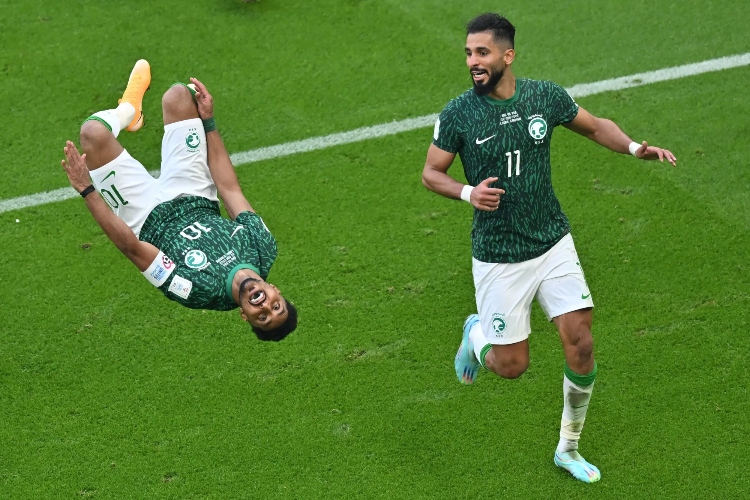
Subsequent defeats to Poland and Mexico ended the run before the knockout rounds, but the win over Argentina remains the most famous single result in Saudi World Cup history, and a vivid reminder of the team’s capacity to rise to exceptional performance.
As Saudi Arabia prepares for the 2026 FIFA World Cup, the national team enters the tournament backed by unprecedented investment in the country’s football ecosystem.
The rapid growth of the Saudi Pro League has attracted internationally renowned players and coaches, including Georgios Donis, the current coach, while significant resources have been directed toward infrastructure, youth development, and long-term national-team preparation as part of a broader strategy to elevate Saudi football on the global stage.
Drawn into Group H alongside Spain, Uruguay, and Cape Verde, the Green Falcons will begin their campaign against Uruguay on 15 June in Miami, face Spain on 21 June in Atlanta, and conclude the group stage against Cape Verde on 26 June in Houston.
With a history that includes memorable World Cup moments and a renewed commitment to football development, Saudi Arabia will aim to translate years of investment and preparation into a successful run.



Comments (0)