


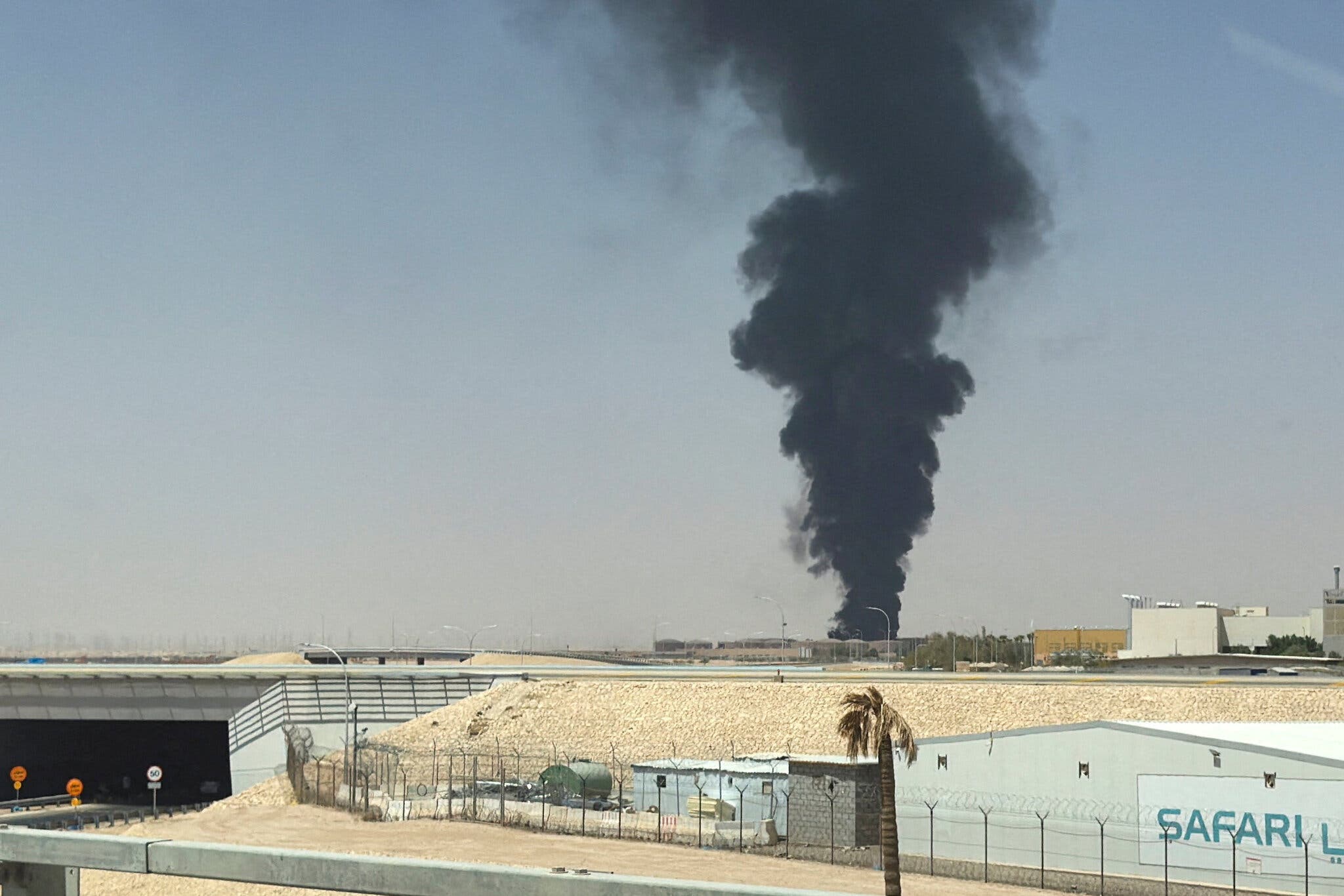
Saudi Arabia issued air raid alerts in Riyadh early Saturday, 19 September, as attacks by Yemen’s Iran-aligned Houthi movement continue to escalate across the Kingdom.
The Saudi Civil Defense issued warnings for Riyadh and the nearby city of Al-Kharj early Saturday, before later announcing that the danger had passed. Similar alerts were also issued in other parts of the Kingdom amid the heightened regional tensions.
The alerts came at around 2:58 a.m. local time and again at 5:19 a.m. The alerts were delivered to residents’ mobile phones via the National Early Warning Platform, with one message warning people in the capital that the area was facing an aerial threat.
The warnings are the first air raid alerts issued for Riyadh since the latest escalation between Saudi Arabia and the Houthis intensified in recent weeks. The alerts follow a series of Houthi drone and missile attacks targeting Saudi cities and infrastructure.
Later on Saturday, the Houthis claimed they had attacked what they described as “sensitive” sites in Riyadh using missiles and drones. Reuters footage and photographs showed a large plume of black smoke near King Khalid International Airport, with flames visible behind what appeared to be fuel storage tanks.
The Saudi-led military coalition said its air defenses had destroyed a missile launched toward Riyadh early Saturday. The coalition also said it had foiled attacks targeting civilians in Bish, Farasan, Taif and Yanbu, although it did not provide details on any resulting damage.
The Houthis also claimed an attack on an Aramco facility in Yanbu, a major Saudi oil-export hub on the Red Sea coast, saying the operation was carried out in response to an attack in Yemen’s capital, Sanaa.
Saturday’s claim appeared to be the Houthis’ first reported strike on Riyadh since the current escalation with Saudi Arabia began in July.
A widening conflict
Tensions between Saudi Arabia and the Houthis have sharply increased following a renewed escalation in Yemen. The Houthis have advanced along Yemen’s western coast and seized the strategic port city of Mokha and areas near the Bab el-Mandeb Strait, a major maritime route connecting the Red Sea with the Gulf of Aden.
The United Nations has warned that the situation around Bab el-Mandeb has become increasingly volatile. The organization said the Houthi advance along Yemen’s west coast and toward the strait has raised concerns over maritime security and international navigation.
The escalation has also spilled into Saudi territory. Earlier this month, Houthi attacks on Abha, Khamis Mushait and Taif reportedly injured civilians and damaged residential properties. Saudi authorities have issued a series of security alerts across the Kingdom as attacks have continued.
On 16 September, Saudi-led coalition forces said they had intercepted and destroyed a Houthi drone south of Makkah before it entered restricted airspace around the holy city. The Houthis denied targeting Makkah or religious sites.
The attacks have also affected Saudi Arabia’s energy infrastructure. A drone attack on the Kingdom’s East-West oil pipeline earlier this month forced the pipeline to temporarily shut down for repairs, according to the United Nations. The pipeline has become particularly important as disruptions to the Strait of Hormuz have complicated Saudi Arabia’s oil-export routes.
Why the Red Sea matters
The latest escalation extends beyond Saudi Arabia and Yemen because of the strategic importance of the Red Sea and Bab el-Mandeb.
The strait is a major shipping corridor between the Indian Ocean and the Mediterranean via the Red Sea and Suez Canal. The United Nations has warned that growing military activity in the area could threaten international navigation and global supply chains.
The renewed fighting has also created a growing humanitarian crisis in Yemen. Reuters reported that more than 100,000 people have been displaced by the latest fighting, with some Yemenis crossing the Red Sea to seek safety in Djibouti.
For residents in Riyadh, Saturday’s alerts marked a significant development in the latest escalation. Although Saudi authorities later issued an all-clear, the incident comes as Houthi attacks and Saudi military operations in Yemen continue to intensify.
The Houthis are an Iran-aligned armed group that controls much of northern Yemen, including the capital, Sana’a. Yemen’s current civil war began in 2014, when the Houthis seized Sana’a and expanded their control across parts of the country. Saudi Arabia intervened in 2015 at the head of a coalition supporting Yemen’s internationally recognized government. A UN-brokered truce in 2022 significantly reduced fighting and cross-border attacks, although it expired later that year without a permanent peace agreement.
Tensions between Saudi Arabia and the Houthis began rising again in mid-2026. The Houthis announced a new phase of confrontation with Saudi Arabia in June and later declared a naval blockade targeting the Kingdom. By July, the group had resumed attacks against Saudi territory, marking the beginning of the latest escalation. The attacks have since expanded to Saudi cities, energy infrastructure and shipping in the Red Sea.





Comments (0)