


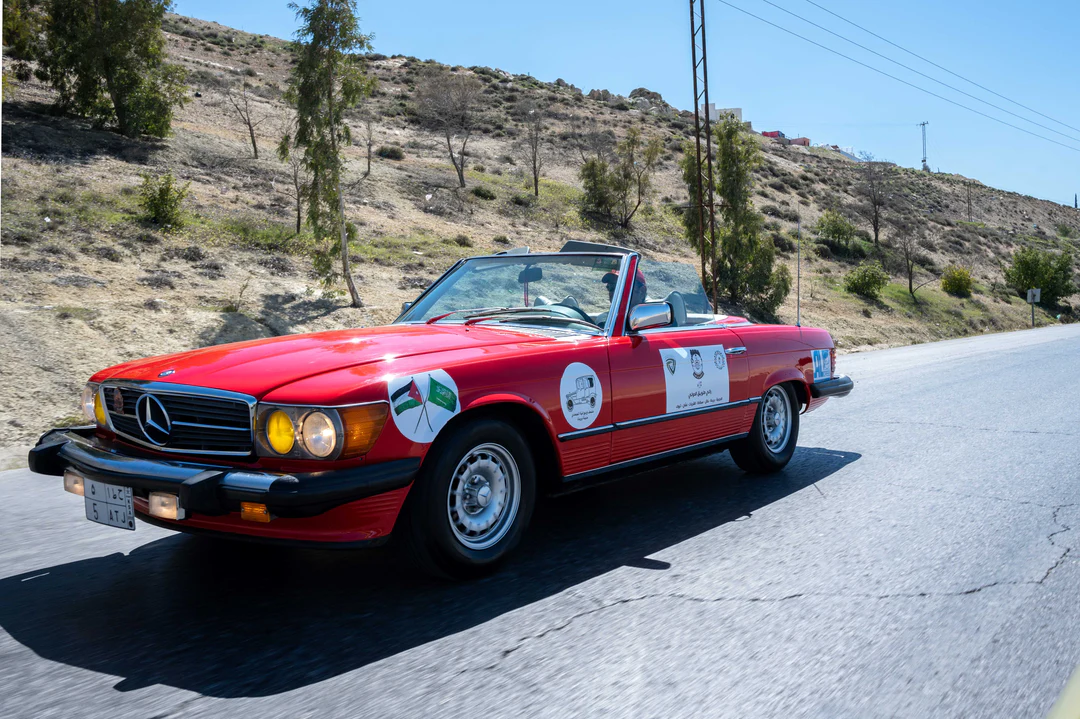
Tuwaiq Rally, Saudi Arabia’s first internationally regulated classic car rally, is gearing up for its most ambitious edition yet. At a press conference held at the Jeddah Corniche Circuit, organizers revealed the route for the fourth edition, which will run from 25 January to 6 February 2026 under the supervision of the Saudi Automobile and Motorcycle Federation (SAMF).
The event is organized by Cross Section Global and will bring together more than 50 classic cars from 1979 and earlier for a cross-border journey that connects Saudi Arabia with the wider Gulf region.
A route that tells a regional story
The 2026 Tuwaiq Rally will cover more than 3,400 kilometers, starting in AlUla and then passing through Hail, Buraidah, Riyadh, and Al-Ahsa before leaving Saudi Arabia for the United Arab Emirates and Oman. From the Eastern Province, the convoy will head to Jebel Dhanna and Al Ain in the UAE, continue to Muscat in Oman, and conclude in Sharjah in the UAE, effectively tracing a loop through some of the Gulf’s most distinctive landscapes and cities.
This extended route marks an evolution from previous editions, which traditionally started in Riyadh and spanned around 2,500 kilometers to a single international destination. By starting in AlUla and weaving through multiple Saudi regions before crossing borders, the 2026 edition places equal emphasis on the Kingdom’s own heritage and on regional connectivity across the Gulf.
Saudi Arabia’s first internationally regulated classic car rally
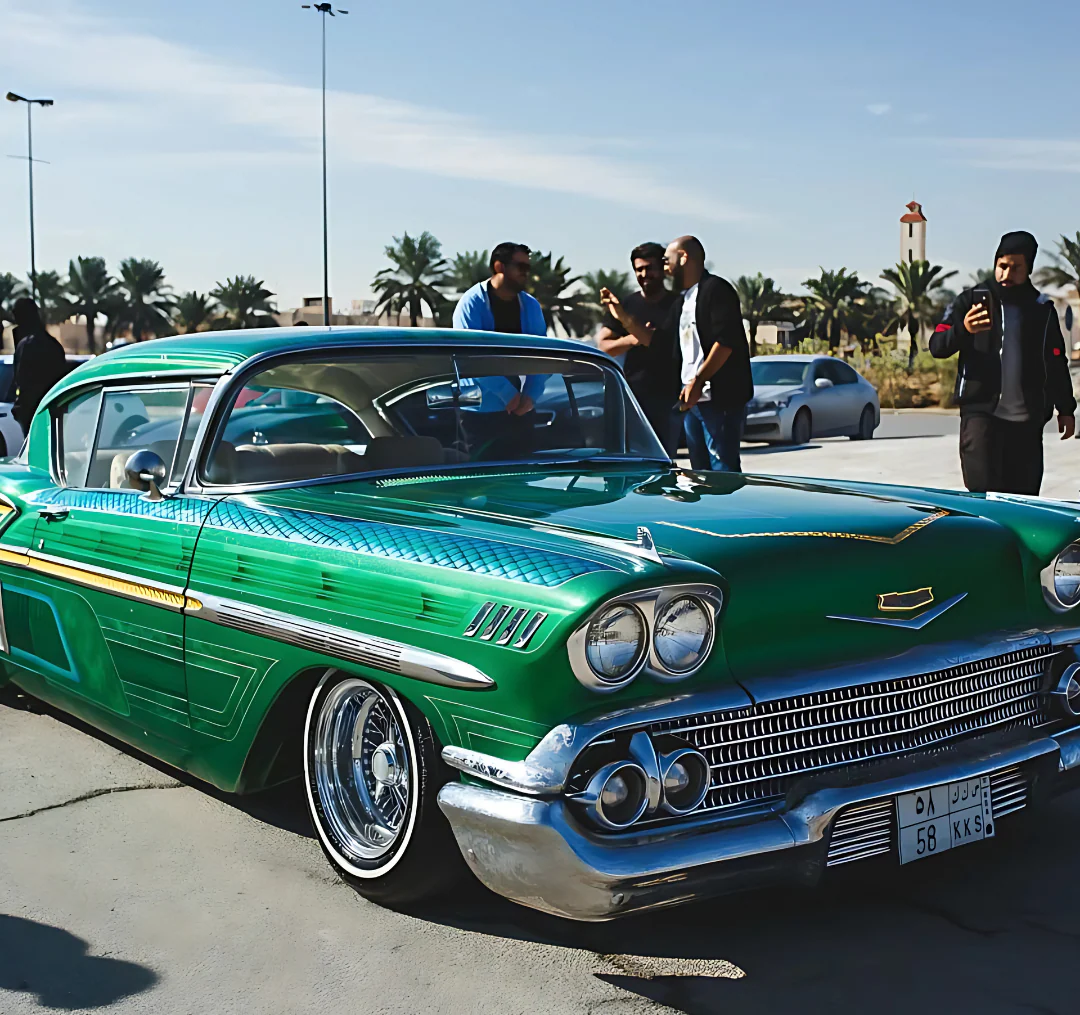
Tuwaiq Rally is described by organizers as Saudi Arabia’s first internationally regulated classic car rally, designed for vehicles built in 1979 or earlier and structured around global regularity rally standards. Rather than focusing on outright speed, the rally follows a stage-based format where crews must complete each stage within a specified time window to earn points. Precision, navigation, and consistency define the competition, and penalties are awarded for arriving too early or too late to each control point.
The rally typically includes checkpoints, live tracking, and daily results, along with evening celebrations in each host city that bring together local classic car clubs, enthusiasts, and residents. Media coverage spans both regional outlets and specialist international motoring titles, helping to position Tuwaiq Rally as a fixture on the global classic rally calendar.
What makes Tuwaiq Rally distinctive is its focus on classic cars as moving cultural artifacts rather than just machines. Participants bring historically significant models from Europe, the Gulf, and beyond, often with period-correct liveries and original details. Eligibility criteria that concentrate on vehicles from 1979 and earlier ensure that the field is filled with cars that represent a specific era in automotive history, from grand tourers and sports cars to robust sedans and off-road icons.
By crossing regions like AlUla, which is known for its Nabataean heritage and UNESCO-listed Hegra, as well as Hail, Riyadh, and coastal and desert areas in the UAE and Oman, the rally deliberately sets these cars against some of the Middle East’s most striking backdrops. The 2026 route is designed to connect mechanical heritage with natural and historical landscapes, reinforcing the rally’s identity as a cultural journey as much as a competitive one.
Motorsport and soft power
The timing of the Tuwaiq Rally announcement at the Jeddah Corniche Circuit is significant. The venue has become a symbol of Saudi Arabia’s modern motorsport ambitions, hosting Formula 1 and, from 2025, World Rally Championship stages based in Jeddah. The same federation that oversees these headline events, SAMF, is also backing Tuwaiq Rally, which shows how classic car culture is being integrated into the Kingdom’s wider motorsport strategy.
In that sense, Tuwaiq Rally complements high-profile events like the Dakar Rally and WRC Rally Saudi Arabia by highlighting the country’s roads and regions through a more measured, heritage-focused lens. It attracts owners, navigators, and support crews from multiple continents and acts as an informal ambassador for Saudi tourism, history, and hospitality. Local communities along the route also benefit from hotel stays, service requirements, and media attention, linking the rally to broader economic and cultural goals.
What to expect in 2026
For spectators and enthusiasts, the 2026 edition promises several layers of interest. Fans in AlUla, Hail, Buraidah, Riyadh, and Al-Ahsa will be able to see rare cars up close during ceremonial starts, finishes, or regrouping stops. Cross-border stages into Jebel Dhanna, Al Ain, Muscat, and Sharjah will create opportunities for Gulf-based classic car communities to connect with the Saudi contingent and international entrants. The field is expected to include over 50 cars, with crews representing a mix of veteran competitors and first-time entrants drawn by the new, extended route.
For participants, the challenge lies in managing reliability over long distances, navigating precisely across varied terrains, and maintaining concentration over nearly two weeks of driving. The rally’s regularity format makes it accessible to dedicated amateurs while still rewarding serious preparation and teamwork.

Comments (0)