


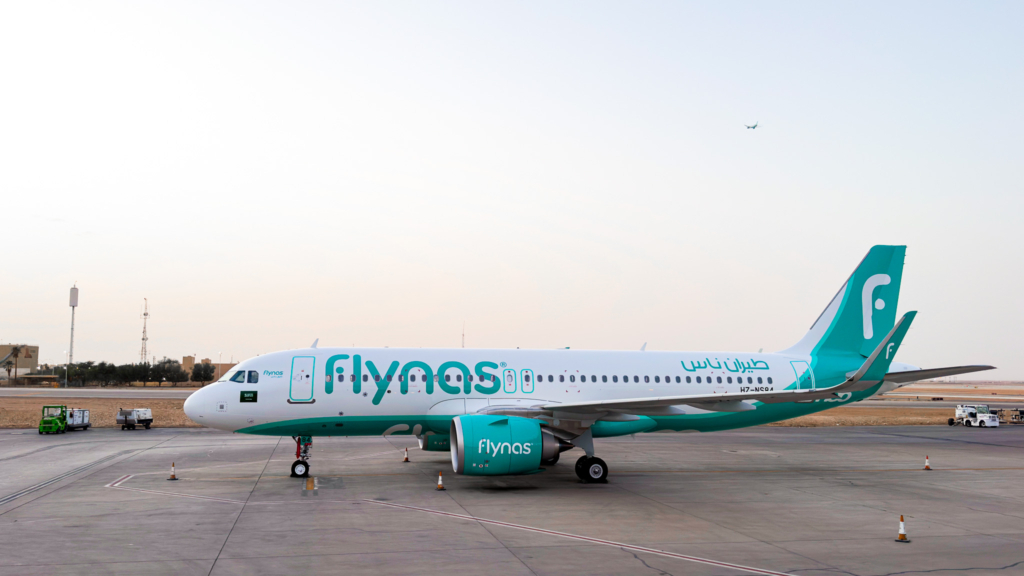
When Saudi low-cost carrier flynas signed an agreement with the Syrian General Authority of Civil Aviation and Air Transport to establish a new airline under the name flynas Syria, it signalled a new phase in how regional cooperation is being translated into infrastructure, mobility, and everyday connectivity.
Under the agreement, flynas Syria will be structured as a joint venture, with 51 percent owned by the Syrian civil aviation authority and 49 percent by the Saudi-owned flynas. Operations are scheduled to begin in the fourth quarter of 2026, once licensing and operational procedures are completed in coordination with relevant authorities. The new airline is expected to operate flights across the Middle East, Africa, and Europe, strengthening Syria’s regional and international air links.
The agreement sits within a broader framework of bilateral cooperation between Saudi Arabia and Syria and was coordinated alongside the Ministry of Investment, underlining that aviation is being treated as a strategic sector rather than a standalone commercial initiative.
Aviation as a Foundation for Economic Revival
Air connectivity is rarely just about transport. It is often one of the first tangible indicators that trade, tourism, and business confidence are beginning to move again.
Recent reporting has placed the airline launch within a larger package of Saudi investment commitments in Syria, including airport development and infrastructure projects. Reuters described the initiative as part of one of the most significant waves of international economic engagement in Syria following the easing of sanctions in late 2025. The Associated Press similarly framed the aviation partnership as part of broader efforts to revitalise key sectors of Syria’s economy.
In that context, flynas Syria becomes a cornerstone rather than a side note. Reliable air links enable business delegations, ease diaspora travel, support tourism flows, and connect local industries to regional markets. They also signal confidence. Airlines require regulatory coordination, operational readiness, and adherence to international safety standards shaped by frameworks such as the Convention on International Civil Aviation, overseen globally by ICAO.
The structure of the joint venture reflects this dual ambition. Majority Syrian ownership reinforces national participation and oversight, while flynas brings low-cost operational expertise and regional network experience. This blend of public authority and private sector know-how is often how emerging aviation markets rebuild and scale.
Building on Renewed Saudi-Syrian Connectivity
The announcement does not emerge in isolation. In June 2025, flynas became the first Saudi airline to resume scheduled flights to Damascus, reopening a route that had been suspended for over a decade. Since then, flynas has operated regular services between Riyadh, Jeddah, Dammam, and Damascus, creating a foundation of passenger traffic and operational familiarity on which the new airline can build.
The move from route resumption to joint venture formation signals a transition from short-term reconnection to longer-term sector development. Instead of relying solely on foreign carriers, Syria would gain a new airline rooted in its own regulatory framework while benefiting from regional integration.
For Saudi Arabia, the partnership aligns with a wider pattern of economic diplomacy that leverages infrastructure and connectivity to deepen regional engagement. For Syria, it represents an opportunity to modernise civil aviation capacity and reposition itself within regional air travel networks.
What This Means for the Region’s Travel Landscape
If flynas Syria launches on schedule in late 2026, its impact could be felt beyond ticket counters. Expanded connectivity across the Middle East, Africa, and Europe would make travel to and from Syria more accessible, particularly for diaspora communities and business travellers. Increased flight frequencies typically stimulate demand rather than simply absorb it, particularly when low-cost models are involved.
The ripple effects extend further. Air routes influence tourism flows, conference hosting, cargo logistics, and foreign investment decisions. They shape how easily ideas, goods, and people move. In regions rebuilding after prolonged disruption, aviation often serves as a confidence marker for other sectors.
There are practical considerations ahead, including regulatory clearances, fleet planning, and operational setup. Yet the framework outlined in the announcement emphasises full compliance with approved safety and security standards, suggesting a deliberate effort to align with global best practices from the outset.
Ultimately, the launch of flynas Syria can be read as part of a broader recalibration of regional relationships, where connectivity and investment play a central role in shaping new dynamics. Air travel has a uniquely visible quality. New routes appear on airport boards and booking platforms. They translate diplomatic gestures into lived experience.
If executed as planned, flynas Syria will not only add capacity to a recovering aviation market but it will also serve as a practical instrument of integration, reinforcing economic ties and expanding mobility for individuals and businesses alike.





Comments (0)