


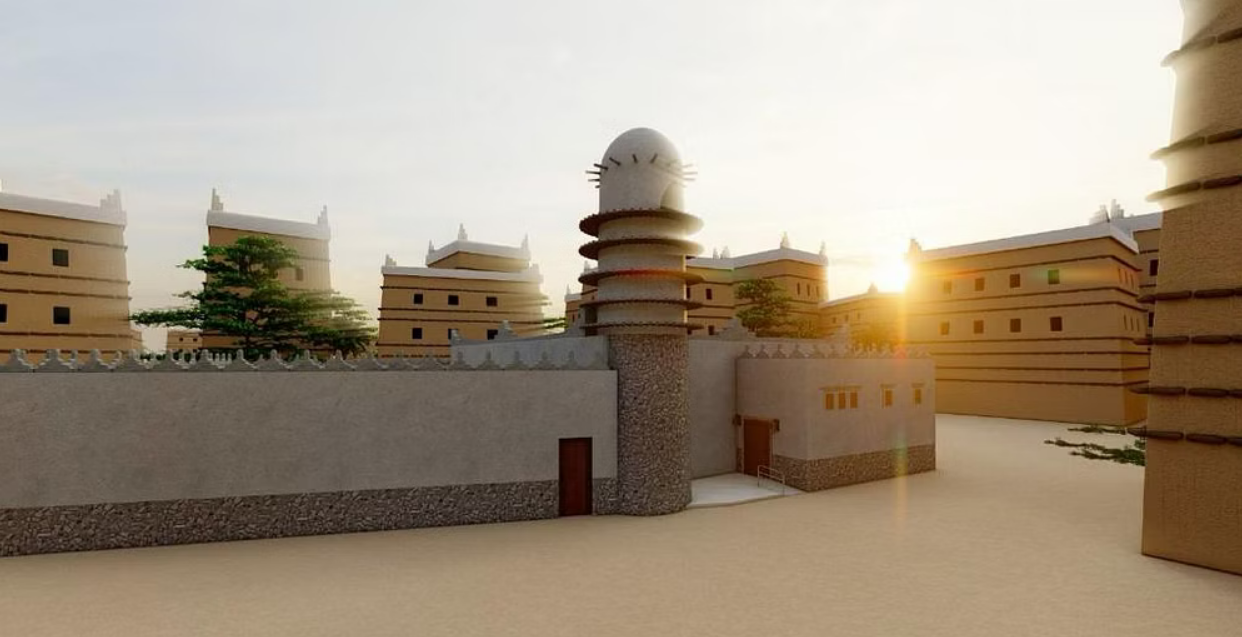
More than 1,300 years after it was first built in the highlands of southwestern Saudi Arabia, Al-Masqi Mosque has undergone a meticulous restoration carried out under a national heritage initiative led by Crown Prince Mohammed bin Salman.
The Prince Mohammed bin Salman Project for the Development of Historical Mosques announced on Sunday 1 March that it had completed the rehabilitation of Al-Masqi Mosque in the Aseer Region, about 32 kilometers southeast of Abha. The mosque, whose origins date back more than 1,300 years to between 73 AH and 75 AH (692–694 C.E.), is considered among the oldest in the region.
Built in the Sarawat architectural style, the 409-square-meter structure is distinguished by its thick load-bearing stone walls and the use of juniper wood, materials long associated with the mountainous terrain of the Sarawat range. The design reflects the traditional urban fabric of the area, where buildings were shaped by climate, topography and locally available resources.
Al-Masqi Mosque was historically a congregational hub and was mentioned by the 10th-century historian Al-Hamdani, underscoring its significance in early Islamic history. Following its restoration, the mosque can accommodate 156 worshippers.
The rehabilitation was carried out by specialized Saudi companies and engineers as part of the project’s second phase. The work sought to preserve the mosque’s original character while integrating modern sustainability standards, including structural reinforcements, is designed to extend the building’s lifespan.
The broader initiative forms part of the Kingdom’s cultural preservation efforts aligned with Saudi Vision 2030, the sweeping reform program aimed at diversifying the economy and strengthening national identity.



Comments (0)