

Riyadh’s restaurant boom is no longer a future promise; it is a fully fledged urban transformation, driven as much by master-planned districts and holding companies as by chefs and Instagram feeds.
What was once a city of family grills, hotel buffets and shawarma joints is quietly becoming one of the Gulf’s most ambitious dining laboratories, where imported brands and local operators test how far Saudi diners are willing, and able, to go.
A City Where the Dining Room Moved to the Masterplan
On a weekday evening in the King Abdullah Financial District (KAFD), the pedestrian deck feels less like an office quarter than a campus built around food. Glassy towers frame a canyon of restaurants and cafés; office workers linger over mocktails, teenagers pose under LED facades, and families make a night of it without ever leaving the cluster.
This is not accidental. Full-service restaurants in Saudi Arabia are part of a market projected to be worth more than USD 16 billion in 2025, growing to about USD 24 billion by 2030, with dine-in still accounting for roughly two-thirds of revenue despite the delivery boom. Developers and operators have treated that projection as an instruction manual. Retail-anchored locations, including malls, lifestyle centres and mixed-use districts, are expected to capture close to 40 percent of the market, helped by the deliberate integration of dining into entertainment and shopping.
In Riyadh, that logic is visible from Bujairi Terrace in Diriyah, built as an open-air terrace of restaurants facing the mud-brick silhouettes of At-Turaif, to Solitaire Mall, a three-storey lifestyle complex set to host the London-born Arcade Food Hall and Paris’ Perruche. The city is being replumbed so that restaurants are no longer scattered amenities; they are anchor tenants and, increasingly, the main event.
The New Flagships: From Beirut and London to Diriyah and KAFD
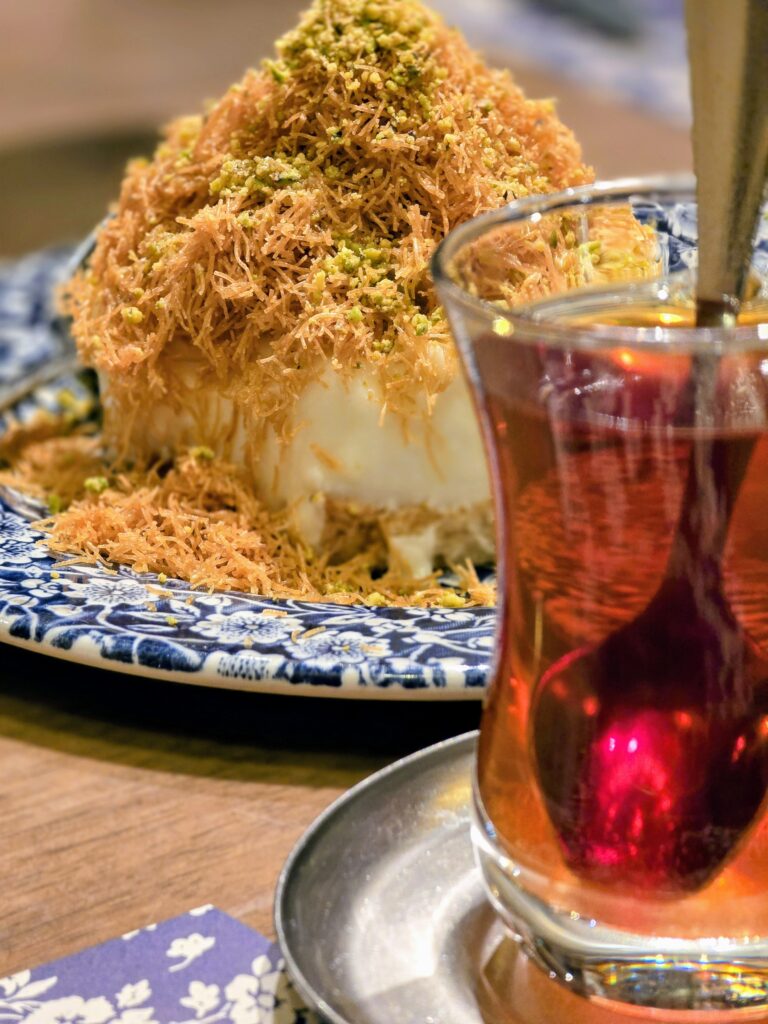
The names now appearing on Riyadh signboards would have sounded improbable a decade ago. Liza, a Beirut institution with a Paris outpost, opened recently at Bujairi Terrace, bringing its polished take on Lebanese home cooking to the shadow of At-Turaif. Set among lantern-lit interiors and stone-textured tables, it offers a version of Levantine comfort food staged as destination dining, with hours stretching to past midnight on weekends, timings that match a city where the night has become prime social time.
Across town in KAFD, Apple Butter Café has chosen the financial district for its first branch outside the United Kingdom. The London-born café, known for elaborate desserts and maximalist interiors, opened in early 2026 in Area 4 of the district, positioning itself less as a grab-and-go spot and more as a living room for bankers, residents and visitors circulating through the canyon of glass. Its opening hours, which focus on daytime and an early evening window, suggest a brand calibrating itself to office rhythms rather than late-night crowds.
Then there is The Vinyl Ember, the signature grill at the Kimpton KAFD Riyadh, an American-style restaurant where the pitch is as much about curated soundscapes as it is about steak. Open from 18:00 to 01:00, the restaurant leans into open-fire cooking, a chef’s counter and a clubby interior, framed as a place to groove rather than simply eat, with alcohol-free cocktails and a soundtrack designed to match the hotel’s boutique positioning. Within the same property, Botanica and Ziya add a global brasserie and a lobby lounge, showing how a single building can now host three distinct concepts catering to different slices of Riyadh’s new dining class.
There are even smaller international joints that have opened in Riyadh, such a Supernova, bringing smash burgers all the way from London.
Many of the splashiest names, including Amazónico, Zuma and Sushisamba, are either already present via pop-ups or confirmed to be opening in the near term, often in KAFD or Solitaire Mall. That pipeline, tracked closely by regional lifestyle magazines, underscores how Riyadh has become the next logical stop for global brands that have already tested Dubai and Doha.
The Quiet Power of Holding Companies
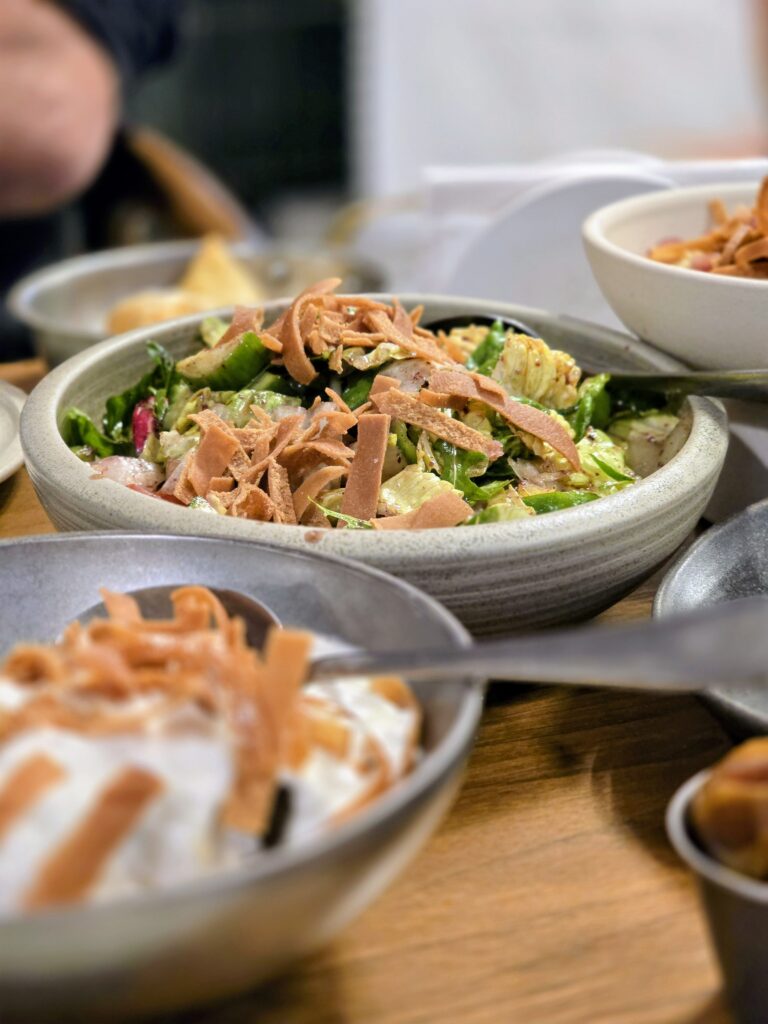
Behind the neon and the soft-launch social media posts sit a handful of holding companies whose strategies are reshaping what and where Riyadh eats. MJS Holding, a Saudi hospitality group, is one of the most visible.
The company was an early mover in KAFD, opening Il Baretto, a London-origin Italian restaurant that became one of the district’s first culinary landmarks. It followed with Roka, a contemporary Japanese robatayaki concept, establishing a template: international brands, high-design interiors and locations in districts aligned with Vision 2030’s tourism and lifestyle goals. MJS is also the Saudi partner behind Arcade Food Hall’s arrival at Solitaire Mall and is bringing brands such as Bambini, Liza and Perruche into the Kingdom.
In public statements, the group frames its work as part of a national project to turn Saudi Arabia into a culinary capital, language that mirrors official Vision 2030 rhetoric around tourism and entertainment. That alignment matters. Many of the districts where these restaurants cluster, including KAFD, Diriyah Gate and Boulevard World, are themselves giga-projects backed by state-linked capital, with hospitality contracts used as tools to shape the image of the city as much as to fill leases.
This concentration of power has upsides: deep pockets, the ability to curate a mix of brands, and economies of scale in training and procurement. It also raises questions about how much room remains for independently owned restaurants to survive in the very districts that now define Riyadh’s food image.
Bujairi and KAFD: The New Dining Poles
If KAFD is the business district turned dining campus, Bujairi Terrace is heritage reframed as a culinary backdrop. Overlooking the UNESCO-listed At-Turaif, the complex is designed as a terrace of more than 20 high-end restaurants and cafés, with open-air seating, engineered sightlines and a calendar of events designed to draw both residents and tourists.
New signings and openings there, such as Liza, sit alongside other regional and international names, positioning the area as a kind of open-air food court for upmarket diners. The logic is clear: turn a historic site into an all-day, all-evening destination by guaranteeing that visitors can move from museums to mezze without ever getting into a car.
KAFD, by contrast, offers an urban, almost cinematic density. The district’s marketing emphasises architecture and skyline, but much of the day-to-day life is carried by restaurants and cafés operating at street level. Guides now present KAFD as one of Riyadh’s top culinary destinations, highlighting everything from elegant brunch spots to burger joints. When combined with hotel offerings like The Vinyl Ember, Botanica and Ziya, KAFD illustrates how dining has become a key tool in turning what could have been a sterile office quarter into a neighbourhood.
Taken together, these two poles suggest that in the new Riyadh, where you eat is also a statement about which version of the city you inhabit: the revived historic core, the glass-and-steel future, or one of the many in-between spaces.
Winners, Losers and the Vanishing Middle
The influx of international names and master-planned districts has obvious winners: global brands acquiring footholds in one of the world’s fastest-growing restaurant markets, developers able to charge premium rents, and a growing class of diners eager for novelty. The Saudis filling these dining rooms are younger, more mobile and more globally exposed than any previous generation; they are used to seeing the same brands in Knightsbridge, the Dubai Marina and, now, KAFD.
But the model also risks hollowing out the middle. Industry analyses note that while full-service restaurants will likely keep roughly 65 percent of the market in the near term, standalone venues are under pressure from rising commercial rents, especially around megaprojects. Retail-integrated locations, such as Bujairi, KAFD and mall-linked districts, are set to grow faster, precisely because they can offer the density, footfall and co-marketing that independent operators struggle to secure.
In practical terms, that means a Riyadh where mid-priced, family-run restaurants in older neighbourhoods face a double squeeze: competition from high-gloss brands on one side and delivery platforms commodifying their food on the other. For now, the city still has legions of grill houses, shawarma kiosks and simple kabsa canteens, but they increasingly occupy a parallel universe to the world of reservation-only terraces and design-hotel grills.
At the same time, local operators are not passive. Some have adopted the aesthetics and social media strategies of their imported peers; others have leaned into niche offerings or neighbourhood-based loyalty. The next phase of Riyadh’s restaurant boom may well be decided in how much space capital leaves for these homegrown experiments to breathe.
Between Soft Power and Everyday Habits
Zoom out, and Riyadh’s restaurant explosion is about more than food. It is part of a deliberate attempt to reimagine Saudi urban life under Vision 2030, using dining as a shortcut to a cosmopolitan image and as a practical tool for activating new districts. The presence of brands from Beirut, London and beyond signals to visitors and residents that the city belongs on the same circuit as other global capitals; the clustering of those brands in mega-projects turns every dinner into an encounter with a state-backed vision of the future.
Yet the success of this strategy depends on the small gestures that do not make it into investor decks: the choice of a café as a social space instead of a private majlis; the decision to take visiting relatives to a terrace overlooking At-Turaif rather than a hotel buffet; the way a financial district grill becomes a regular stop, not just a novelty.
Riyadh is not done changing. The pipeline of announced openings, from big-ticket names like Amazónico and Zuma to future waves of mid-market concepts, suggests that the city’s culinary map will keep thickening through the rest of the decade. The question now is less whether the boom will continue and more what kind of city it will leave behind: one where dining is another expression of inequality, or one where the energy of this moment finds its way into a broader, more accessible food culture.
Comments (0)