



By late March, the Saudi map begins to flip. While the lowlands edge toward summer heat, the highlands and canyons of the south-west and far north are just settling into their best season. Booking data for Eid Al-Fitr 2026 already shows Abha in Aseer region among the leading domestic destinations, alongside Jeddah and AlUla, as more Saudis choose to stay inside the Kingdom for their spring break. For anyone used to thinking of Saudi Arabia as a country of dunes and expressways, Aseer’s misted forests and Tabuk’s green canyons feel almost like another place.
What ties these two very different regions together is not only altitude and cooler air. It is the sense that Saudi domestic travel has grown up enough to support slower, landscape-led trips, where the point is to walk, camp and sit still for a while rather than bounce between malls and mega-events. Spring 2026 may be the first season where that shift becomes visible on the ground.
Aseer: Above the Clouds in the “Green Roof” of Saudi Arabia
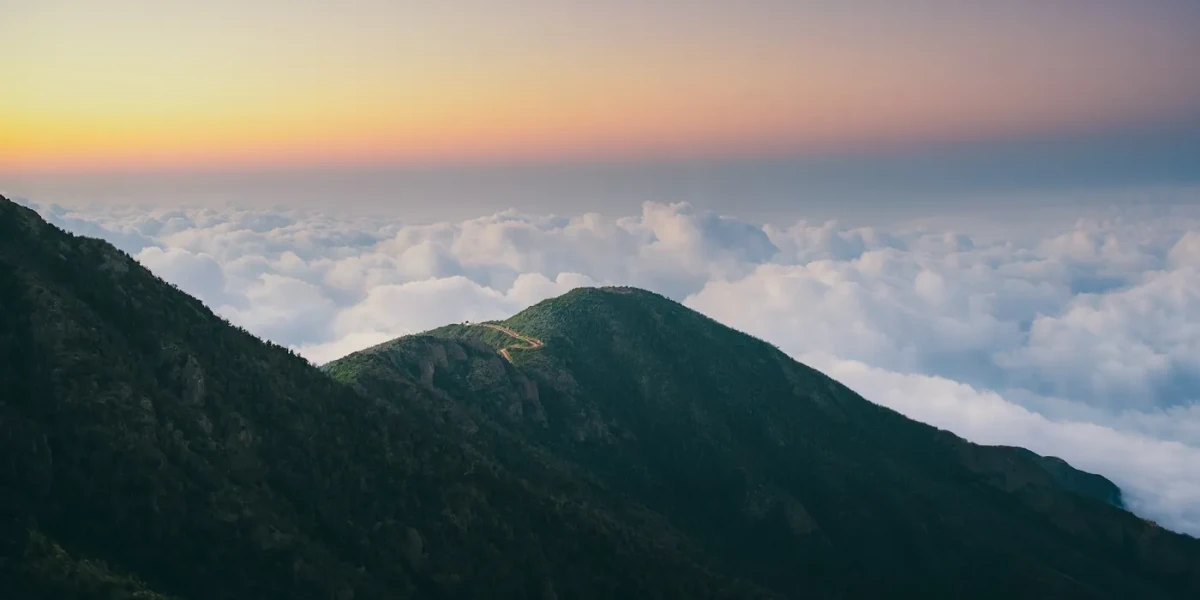
Aseer has long been a summer escape for families from the Gulf coast and central plateau, but for years it remained under the radar for international visitors. That is changing as national tourism campaigns and independent guides begin to present the province as Saudi Arabia’s highland playground. Visit Saudi now opens its Aseer Hiking Guide by inviting travellers to “discover Aseer’s mountains, lush forests and trails” around Abha and nearby national parks.
Abha itself sits more than 2,200 metres above sea level, making it one of the highest cities in the Kingdom. On clear days, the city’s edges drop away into terraced valleys and juniper‑covered slopes; on others, clouds roll in low enough that neighbourhood parks briefly disappear. Travel writers have taken to calling it the “capital of the clouds”, but for most Saudis it is simply a place where summer feels like spring, and spring feels like a soft version of winter.
Twenty kilometres away, Al Soudah rises to over 3,000 metres, the highest point in the Arabian Peninsula and the heart of what locals call the “Green Roof of Saudi Arabia”. Here the Sarawat Mountains are thick with natural vegetation, from wild juniper groves to seasonal wildflowers, and the air can turn cold enough at night to require jackets even in August. Aseer National Park, which includes parts of Jabal Sawda and surrounding valleys, offers a network of trails and viewpoints that are finally being mapped and signed with hikers in mind.
One of the most evocative routes is the Gurun Historic Route, a trail within Aseer National Park that follows old mountain paths used by traders and tribes. Guides describe a landscape of terraced farms, rock formations and “hidden waterfalls” in wadis such as Wadi Al-Habal and Wadi Al-Namas, where spring rains bring brief flushes of green. Above, Al Sahab (“the cloud”) park near Abha lets visitors quite literally walk through low-lying cloud bands, with viewpoints where visibility can shift from kilometres to metres in minutes.
For travellers used to Saudi Arabia’s newer entertainment districts, Aseer offers a different kind of infrastructure. Cable cars link Abha to nearby peaks and resorts; there are family‑friendly parks such as Abu Kheyal and Waterfall Park, and cultural stops like Al Muftaha Village, a cluster of mud houses painted in geometric Aseeri motifs and reused as galleries and cafes. Al-Soudah Season, first launched in 2019 as part of the Saudi Seasons initiative, has brought concerts, art installations and food stalls to the mountain each summer, but for hikers and nature‑minded visitors, the sweet spot is actually spring, before the heaviest domestic crowds arrive.
The region’s hospitality is catching up with its landscape. Aseer now appears in tour aggregators’ “best of Saudi” lists with dedicated hiking and camping tours, from half‑day outings to multiday trips that combine Abha Dam Lake, mountain villages and cloud‑line campsites. Prices remain lower than in the better‑known Red Sea and AlUla resorts, but the direction of travel is clear: Aseer is being positioned as a year‑round eco‑tourism destination, not just a place to escape the August sun.
Tabuk and Wadi Al Disah: Walking Through Stone and Palm
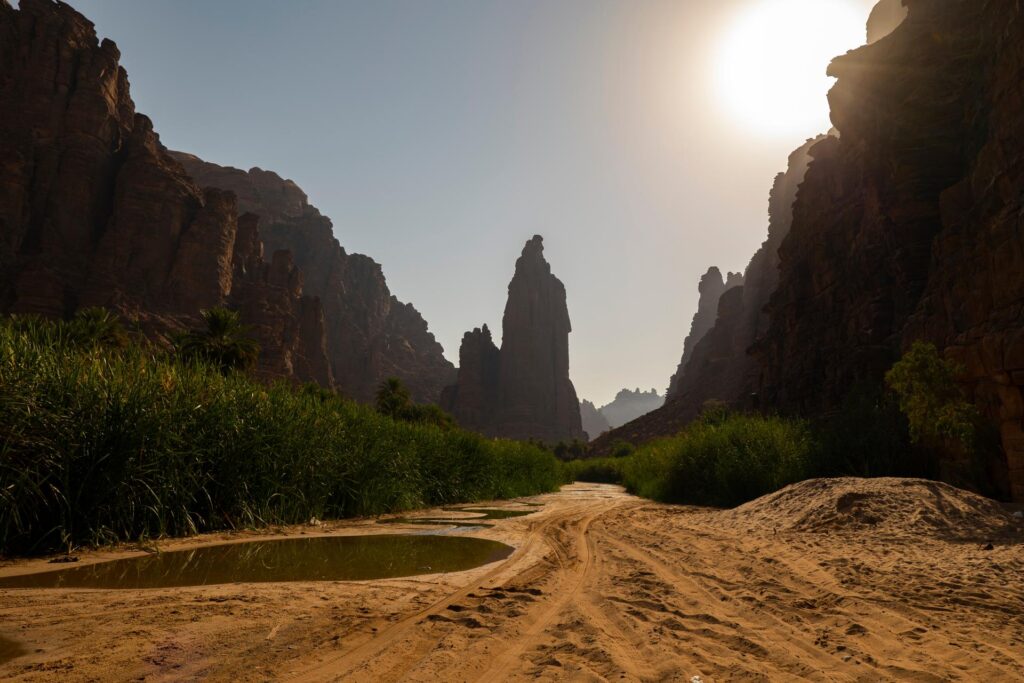
If Aseer is about vertical distance and cool air, Tabuk is about horizontals: long canyon walks, towering sandstone pillars and wadis lined with date palms and reeds. Wadi Al Disah, a valley about 260 kilometres south of Tabuk city, has become the symbol of this landscape.
The journey into the wadi sets the tone. Travellers typically drive to the small town of Disah, then either continue in their own vehicles or, more often, hand over to local drivers waiting at the entrance with four‑wheel‑drive jeeps. The last stretch is along a rough track cut through the sand and shallow water; visitors can expect to pay around SAR 300 per jeep for a one‑hour circuit, with costs shared if groups combine. Once inside, the road gives way to a corridor of palm trees broken by red cliffs that rise hundreds of metres overhead, punctured by natural arches and narrow passages.
Guided trips turn Wadi Al Disah into a weekend‑long experience. Itineraries commonly include a combination of hiking, wading through shallow pools, picnics, and overnight camping under the cliffs, often combined with visits to other nearby formations in the Hisma desert.
Spring is the recommended window. By April, daytime temperatures are warm but not yet punishing, wadis still hold water, and nights are cool enough to make camping comfortable. Tabuk’s airport, with flights from Riyadh, Jeddah and other major cities, turns what used to be a multi‑day drive into an accessible long weekend. On the ground, facilities are improving but still limited compared with more established domestic destinations. Reviews mention basic toilets near the entrance, a scattering of small cafes and shops in Disah town, and the need to bring sufficient water, food and sun protection for time spent deep inside the canyon.
The appeal, for many Saudis, lies precisely in that sense of being slightly outside the tourism machine. Unlike in AlUla or Riyadh Season venues, there are few fixed itineraries or curated photo points; the wadi feels more like a shared backyard than a stage.
That may well change as Tabuk’s broader development accelerates, but for now Wadi Al Disah sits in a liminal moment: accessible enough to draw increasing numbers of domestic and foreign visitors, raw enough to feel like a discovery.
A New Map of Domestic Travel
Analysts tracking Saudi Arabia’s entertainment and tourism sectors note that domestic travel has been rising steadily, helped by campaigns such as “Saudi Summer” and by package deals that bundle accommodation with experiences. The Ministry of Tourism reported a 17 percent increase in internal leisure trips in the summer of 2025, and early data for Eid Al‑Fitr 2026 suggests that cities like Abha and AlUla are now competing directly with international options in family trip planning.
That shift is visible in where people choose to go. For decades, the default escape routes led outward: to Dubai, Bahrain, London, Istanbul. Today, a growing number of Saudis are looking inward, plotting loops that pass from the Asir highlands to the Red Sea coast, then north to Tabuk and back through Riyadh’s own desert edges. Spring, with its brief window of moderate temperatures across much of the country, is emerging as the season when those loops are easiest.
Aseer and Tabuk sit at two ends of that transformation. One offers forests, fog and the feeling of being high above the heat; the other offers stone canyons, water and stars. Neither has entirely caught up with the infrastructure of the capital’s entertainment districts, and that is part of their draw. To travel there now is to see Saudi Arabia at a moment when its natural landscapes are being opened up to visitors but not yet fully smoothed out.

Comments (0)