


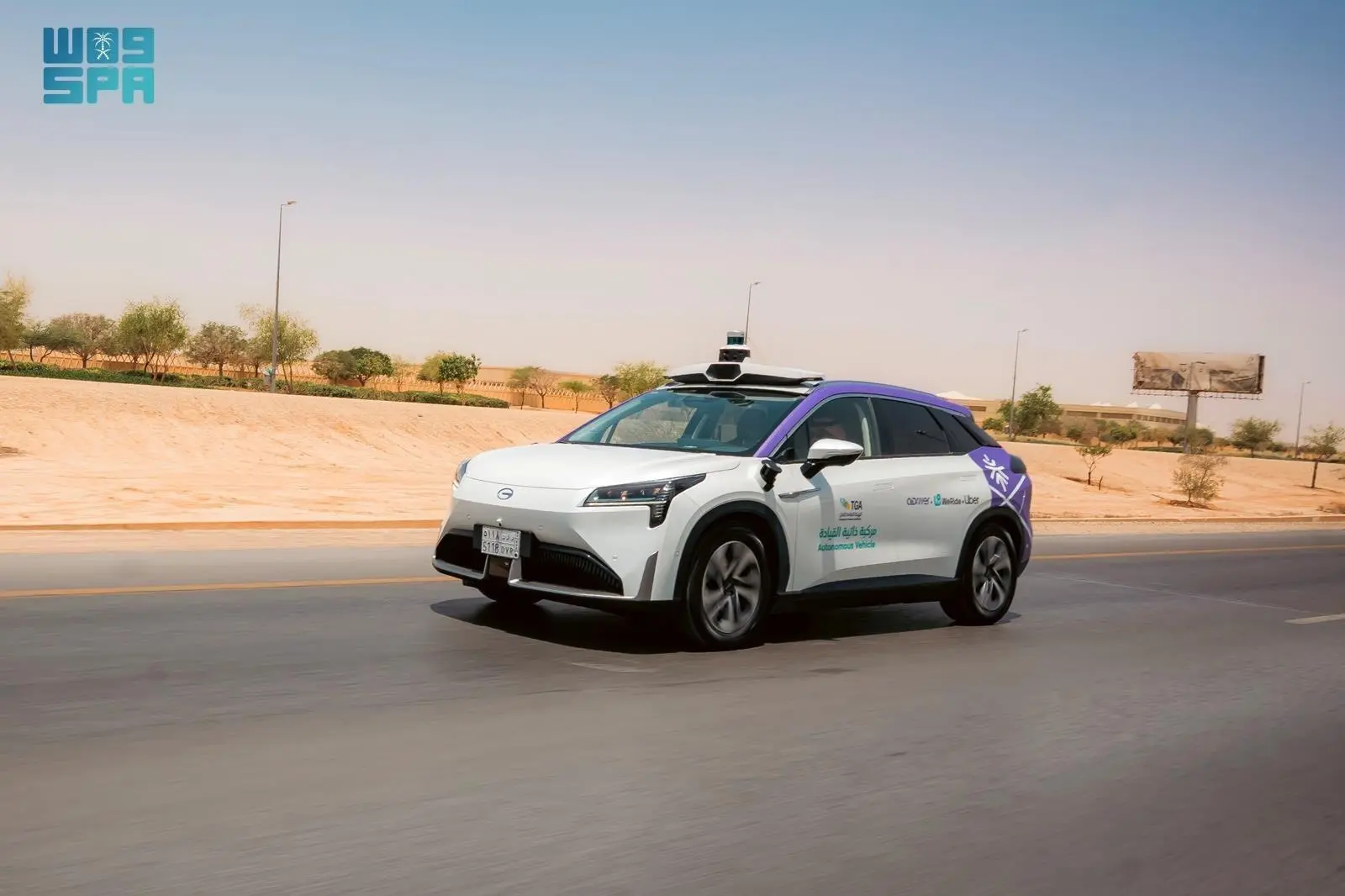
Riyadh’s streets have long been defined by their relentless pace: six lanes of SUVs, delivery bikes weaving through traffic, and the constant hum of a city built for speed. Now a new rhythm is emerging. On 31 March, the Transport General Authority launched Saudi Arabia’s first public autonomous vehicle route, linking Hayat Mall and Riyadh Gallery Mall with driverless electric cars. In testing, these vehicles completed 1,700 trips, carried 3,000 passengers and covered 30,000 kilometres without a human at the wheel.
This is not a science-fiction stunt. It is the beginning of Riyadh positioning itself as a smart city on a scale few Middle Eastern capitals can match. The route, running daily between two of the capital’s busiest shopping hubs, marks the moment when autonomous transport moves from closed test tracks to public roads with real passengers and real schedules.
From Pilot to Public Service
The launch comes after months of rigorous testing. The cars, imported from China and adapted for local conditions, navigated Riyadh’s signature challenges: roundabouts, sudden lane changes, pedestrian crossings and summer heat that can fry lesser electronics. Safety was paramount. Each vehicle carries multiple fail-safes, including remote override capability and collision-avoidance sensors tested against everything from e-scooters to delivery carts.
The Transport General Authority describes the service as “fully autonomous Level 4”, meaning the vehicles can operate without human intervention across their designated route under all normal conditions. Passengers board through the Hayat Mall car park, travel the 5.5-kilometre loop via Prince Mishari bin Abdulaziz Road, and exit at Riyadh Gallery. Fares have yet to be announced, but the service runs daily with frequencies to be determined by demand.
What makes this different from previous pilots around the world is context. Riyadh’s population density, traffic complexity and climate presented conditions far tougher than the orderly European test beds or American suburbs where most autonomous projects begin. The fact that the vehicles handled 30,000 kilometres of real-world operation suggests the technology is ready for Saudi conditions.
Riyadh as Smart City Testbed
This launch fits into a broader ambition. Saudi Arabia declared 2026 the Year of Artificial Intelligence, and Riyadh is where much of that vision plays out. The capital already hosts the Shaheen III supercomputer, one of the world’s most powerful, and a rapidly expanding network of data centres designed to support AI workloads. Autonomous vehicles represent the public face of that infrastructure: AI in motion, handling real-time decisions that affect real people.
The route choice was deliberate. Hayat Mall and Riyadh Gallery sit at opposite ends of a corridor thick with residential towers, office buildings and retail. Connecting them closes a gap in the city’s public transport web, where private cars still dominate short trips. If the pilot succeeds, planners have signalled more routes will follow, potentially linking to the Riyadh Metro and bus rapid transit lines already under construction.
For a city that added 1.5 million residents between 2020 and 2025, autonomous shuttles offer more than novelty. They address congestion that costs the capital an estimated SAR 20 billion annually in lost productivity. Electric vehicles also align with Saudi’s net-zero 2060 pledge, reducing the 30 percent of Riyadh’s emissions that come from transport.
The Saudi Context: Heat, Culture and Scale
Riyadh’s environment demanded specific adaptations. Summer temperatures regularly exceed 45 degrees Celsius, stressing batteries and electronics. The cars use liquid-cooled systems and heat-resistant sensors. Dust storms, common in spring, required upgraded air filtration and camera cleaning. Cultural factors shaped the design too: vehicles accommodate abayas and thobes, with wider doors and step-free entry for families and elderly passengers.
Safety remains the overriding concern. The Transport General Authority reports zero incidents across 1,700 test trips. Each vehicle carries LIDAR, radar, thermal cameras and ultrasonic sensors, backed by 5G connectivity to a central control room. If sensors detect an obstacle or system fault, the vehicle either stops safely or switches to remote human control. Public acceptance trials found 87 percent of passengers comfortable with fully autonomous operation after a single ride.
Part of a Larger Urban Experiment
This is one piece of a wider puzzle. Riyadh’s 2030 Urban Mobility Strategy calls for 30 percent of trips to shift from private cars to public transport by decade’s end. The metro’s first lines open this year. Autonomous vehicles target the “last mile” gaps where fixed rail cannot reach. Pilot projects in other cities, including Jeddah and Dammam, suggest national rollout if Riyadh proves the model.
The business case extends beyond transport. Local firms designed the control software and integration layers. Chinese manufacturers partnered with Saudi universities for localisation. Job creation focuses on high-skill roles: AI operators, fleet technicians and urban planners rather than drivers. This mirrors patterns in your recent startup coverage, where technology creates specialised employment even as it automates routine work.
What Success Looks Like
By mid-2026, planners want daily ridership above 1,000 across multiple routes. Cost per kilometre should drop below SAR 2, competitive with taxis and cheaper than private car ownership when parking and fuel are factored in. Public surveys will track comfort levels, particularly among women and families who represent 60 percent of potential riders.
Challenges remain. Riyadh’s informal traffic patterns—sudden U-turns, pavement parking, delivery bikes—test even the best systems. Regulatory frameworks must evolve to handle liability when no human drives. Public trust takes time; early adopters embrace novelty, but scaling to millions requires routine reliability.
For now, the experiment rolls forward. Between Hayat Mall and Riyadh Gallery, driverless cars glide through Riyadh’s concrete canyons, carrying passengers who check their phones or chat about weekend plans. The vehicles represent more than transport. They signal a capital ready to bet big on the kind of urban future most cities only discuss.

Comments (0)