

The headline figures are striking enough on their own. Saudi Arabia welcomed an estimated 122 million visitors in 2025, a five percent rise on the previous year. Inbound visitor spending reached SR159.9 billion, the highest annual figure ever recorded, up four percent on 2024. Total tourism spending across domestic and international travel combined hit SR300 billion. The Kingdom ranked first globally in international tourism revenue growth in the first quarter of 2025, according to the UN World Tourism Organization.
These are not projections or targets. They are results, published by the Saudi Central Bank and the Ministry of Tourism, covering a year in which the regional security environment was already deteriorating. The numbers deserve to be taken seriously.
They also deserve to be read carefully, because the story they tell is more nuanced than the record-breaking headlines suggest.
he Surplus Nobody Is Talking About
The most underreported figure in the tourism data is the travel surplus. Saudi Arabia recorded a travel surplus of SR49.4 billion in 2025, meaning the gap between what visitors spent inside the Kingdom and what Saudi residents spent travelling abroad. Inbound spending came in at SR159.9 billion. Outbound spending by Saudis travelling abroad reached SR110.4 billion, itself up seven percent on 2024.
A positive travel surplus is not a given for a country undergoing rapid economic opening. The instinct, as disposable incomes rise and international travel becomes more accessible, is for outbound spending to accelerate faster than inbound. The fact that Saudi Arabia is running a meaningful surplus, and widening it, reflects both the growing appeal of the Kingdom as a destination and the deliberate effort to develop domestic alternatives to international leisure travel. When a Saudi family spends a long weekend in AlUla rather than Dubai or Istanbul, that shows up in these numbers. So does every international visitor who comes for Diriyah Season, the Saudi Cup, or a Red Sea resort stay.
Who Is Actually Coming
The source market breakdown is instructive. The top three countries sending tourists to Saudi Arabia in the first half of 2025 were Egypt, Pakistan, and Kuwait, followed by India and Indonesia. Every one of these markets has a significant Muslim population and a deep historical connection to the Kingdom through religious travel.
This is not a criticism. Pilgrimage tourism to Mecca and Medina remains the single most powerful draw Saudi Arabia possesses, and Makkah and Madinah were the top destinations for inbound tourism across the year. The scale of Hajj and Umrah infrastructure improvements, the digitisation of the pilgrimage experience, and the expansion of religious visa access have all contributed to bringing more visitors from these markets for longer.
But the visitor profile also tells you what Vision 2030 still needs to accomplish. The secular leisure traveller from Western Europe, East Asia, or North America, the tourist who comes for a week in AlUla, a diving trip to the Red Sea, or a cultural weekend in Diriyah, remains a relatively small component of overall arrivals. Diversifying the source market mix toward these higher-spend, non-pilgrimage visitors is where the harder work lies, and where the next phase of the tourism strategy will be tested.
Spend Per Visitor: The Underexplored Challenge
Visitor numbers grew five percent in 2025. Inbound spending grew four percent. That means spend per visitor, by the roughest calculation, was essentially flat or slightly down in real terms. For a tourism strategy whose ambition extends beyond sheer visitor volume toward becoming a premium global destination, that is the number to watch.
The Kingdom’s Vision 2030 tourism targets are built not just on footfall but on economic contribution, jobs created, and GDP share. Getting to ten percent of GDP from tourism requires not only more visitors but visitors who stay longer, spend more per day, and distribute their spending across a wider range of experiences beyond accommodation and food. The average inbound tourist stayed 6.7 nights in the first half of 2025. That is a reasonable figure, but it reflects a visitor base still weighted toward pilgrimage travel, where itineraries are relatively fixed, rather than the open-ended leisure visitor who extends their trip because there is more to see.
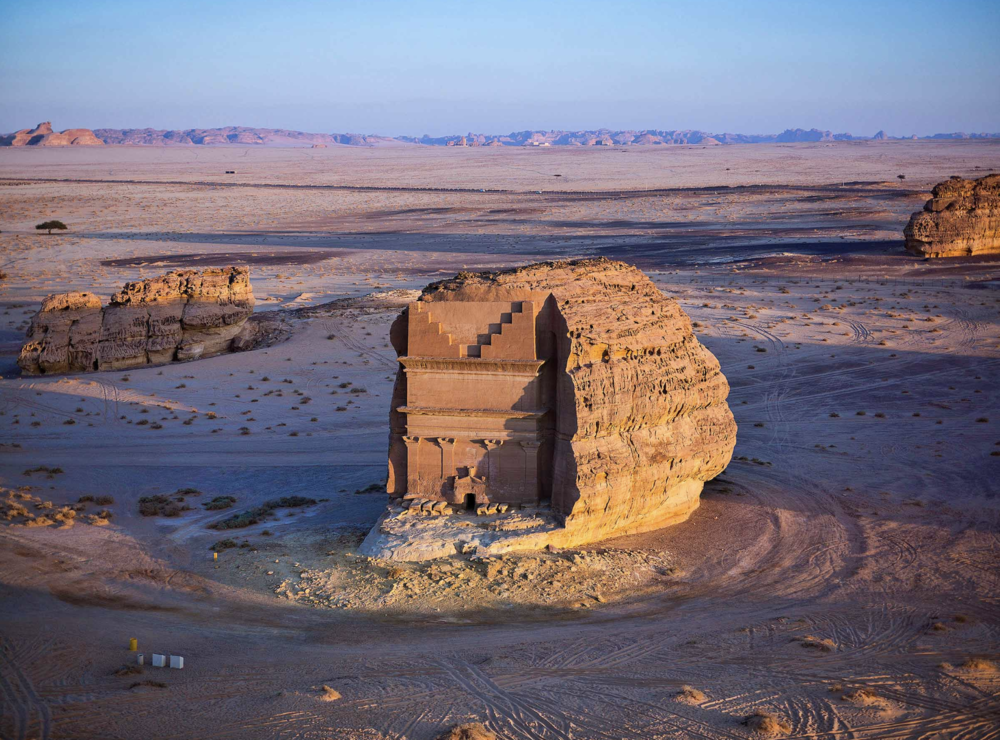
The development of new destinations, AlUla, the Red Sea Project, Amaala, Neom’s Sindalah island, is aimed precisely at this challenge: creating reasons to stay longer and spend more that do not exist anywhere else in the region. Those destinations are still in early phases of opening. Their contribution to average spend and length of stay will become visible in the data over the next several years.
Domestic Travel Is the Quiet Engine
One of the most revealing figures in the 2025 data is the average length of stay for domestic travellers: 18.6 nights. That is nearly three times the inbound average. Saudis travelling within their own country are not making quick city breaks; they are taking extended trips, staying in furnished apartments and private residences as much as hotels, and engaging deeply with the Kingdom’s expanding leisure offering.
This reflects a structural shift that is easy to underestimate. For decades, the preferred holiday destination for middle-class Saudi families was not a domestic resort but a flight to Beirut, Cairo, London, or Bangkok. The combination of new domestic attractions, a sense of national pride in what is being built, and the practical reality of a regional security environment that has made some neighbouring destinations less appealing, has redirected significant leisure spending inward. That is good for the tourism surplus, good for the hospitality sector, and good for the communities and regions that are now receiving that spending.
Riyadh and the Eastern Province led domestic tourism in 2025. But the growth of leisure infrastructure in Asir, Tabuk, AlUla, and the Red Sea coast suggests that spend is beginning to distribute more evenly across the Kingdom’s diverse geography, which is exactly what the tourism strategy is designed to achieve.
What 2026 Holds
The SR300 billion in total spending and 122 million visitors recorded in 2025 were achieved before the current regional conflict intensified. The Iran escalation that began in earnest in late February 2026 has already affected flight cancellations, embassy operations, and the events calendar, with the Jeddah Formula One Grand Prix and the WEF Global Collaboration Meeting among the high-profile postponements.
The tourism sector’s resilience through 2026 will be tested in ways that 2025 was not. The 2019 Abqaiq drone strike, a far more contained incident, produced a temporary dip in investment confidence before a relatively swift recovery. A sustained conflict environment presents a different and more prolonged challenge, particularly for the inbound leisure visitor who has more destination options and less incentive to take on perceived risk.
What the 2025 numbers confirm is that the foundation is real. The infrastructure, the visa reforms, the events calendar, the new destinations, the domestic audience that has genuinely embraced leisure travel within the Kingdom: all of it is producing measurable results. Whether that foundation is strong enough to absorb the turbulence of 2026 and continue growing toward the 150 million visitor target by 2030 is the question the next set of figures will begin to answer.

Comments (0)