


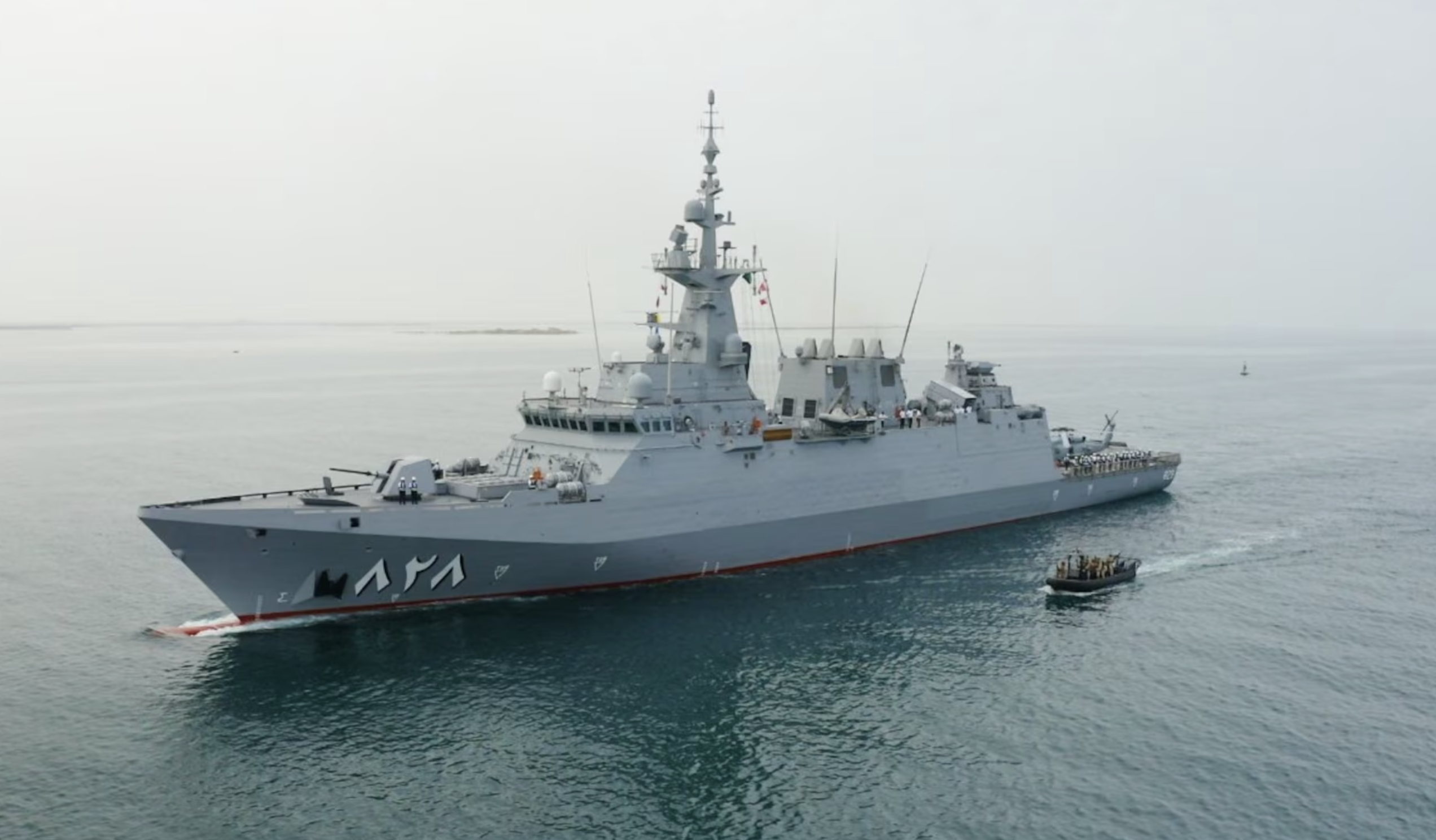
Fourteen countries have signed their names to a new Saudi-led coalition aimed at bringing commercial shipping back to the Red Sea. The Multinational Maritime Defense Alliance was formally launched on August 13 in Riyadh, following two weeks of negotiations that drew representatives from 43 countries and the European Union to the Saudi capital. Its permanent headquarters will be in the Kingdom. Its stated mission, in the language of the founding declaration, is to safeguard freedom of navigation through the Bab al-Mandeb Strait, the Red Sea, and the Gulf of Aden.
The founding members are Saudi Arabia, Kuwait, Bahrain, Qatar, Pakistan, Turkey, Egypt, Jordan, Djibouti, Somalia, Sudan, Yemen, Bangladesh, and Nigeria. Fifteen countries signed the initial declaration; the 14 above have since completed the domestic procedures required to formally accede. The alliance will be led by Rear Admiral Abdullah bin Salem Alshehri of the Royal Saudi Naval Forces, who convened the coalition’s first planners’ meeting in the Kingdom on August 12. Further countries are expected to join in the coming months.
The process that led to the launch began publicly on July 30, when Saudi Arabia hosted an international meeting in Riyadh attended by representatives from 43 of the 51 countries and organisations invited. Over the following two weeks, participating governments reviewed the draft charter, agreed the command structure, and worked through operational arrangements. The formal launch followed on August 13.
Why This Corridor, Why Now
The waterways the alliance is committed to protecting carry, in normal times, roughly 10 to 12 percent of global maritime trade. Bab al-Mandeb, the strait separating Yemen from Djibouti and Eritrea, is 29 kilometres wide at its narrowest. Traffic is limited to two channels for inbound and outbound shipments. At the opposite end of the Red Sea sits the Suez Canal. Between them, the two chokepoints connect the Indian Ocean to the Mediterranean and, historically, Asian producers to European markets.
Since January 2024, that pattern has broken down. Yemen’s Houthi militia, which controls the western Yemeni coast facing the strait, has been attacking commercial vessels transiting the corridor. Initial attacks were framed as retaliation for the war in Gaza. They have continued in various forms since, most recently earlier this month. A significant portion of container shipping has rerouted around the Cape of Good Hope, adding weeks to transit times and pushing insurance premiums to levels not seen in decades. Egyptian state revenues from Suez Canal transit fees have collapsed. Global supply chains have been rewired around the Red Sea’s absence.
Existing international efforts have been substantial. The United States established Operation Prosperity Guardian in December 2023. The European Union launched Operation Aspides in early 2024. Both have run defensive and offensive operations in the corridor. Neither has restored the pre-2024 flow of commercial traffic. Both are now working in a considerably more complex environment following the escalation of the US-Iran conflict earlier this year.
A Regional Framework, Not a Replacement
Saudi officials have been careful to describe the new alliance as a complement to existing coalitions rather than a substitute for them. The founding declaration affirms members’ commitment to the United Nations Charter and to international law. The Ministry of Defence has emphasised, in every public communication about the initiative, that the coalition is open to any country that shares its objectives.
The composition of the membership is instructive on its own terms. Every Gulf Cooperation Council member has signed. So have all five Red Sea littoral states with functioning national governments. Turkey and Pakistan, the two largest regional military powers outside the immediate corridor, are founding members. Nigeria, whose commercial and diaspora interests in the region are substantial, is the sole West African signatory so far. Bangladesh brings South Asian scale and long-standing peacekeeping experience. The list, in aggregate, is more geographically and politically representative of the corridor’s actual users than either the American or European coalitions.
The charter provides for a permanent military command, a joint command-and-control centre, and a combined maritime operations centre. What those structures will look like in operational terms, and how they will integrate with the US and EU forces already operating in the corridor, is a set of technical questions that Alshehri and his counterparts will need to work through over the coming months.
How Saudi Arabia Got Here
The decision to convene and lead this coalition sits within a broader shift in Saudi security posture that has been developing quietly for a year. On September 17, 2025, Saudi Arabia and Pakistan signed a bilateral Strategic Mutual Defence Agreement in Riyadh, formalising what had long been an implicit strategic relationship into a written commitment that treats an attack on either country as an attack on both. On August 7, 2026, Saudi Arabia, Turkey, and Pakistan signed the Mecca Joint Defence Agreement, extending that same principle into a trilateral pact.
The maritime alliance was announced six days later. It is broader in membership than either of the earlier pacts, narrower in specific mission scope, and it addresses a distinct problem. But it is also unmistakably part of the same underlying pattern: a Saudi government that has spent the past twelve months building institutional frameworks for regional security cooperation with countries that share its concerns but that historically have not organised together in this way.
Riyadh has not framed any of these initiatives as substitutes for its existing relationship with Washington. The 123 civil nuclear cooperation agreement signed with the United States on July 22 is currently working its way through Congress. Saudi officials have said publicly that the maritime alliance is designed to work alongside, not around, the American and European coalitions operating in the corridor. What it does, in practical terms, is give Saudi Arabia a coalition of its own to convene, and a headquarters of its own to host.
What Comes First
The alliance’s initial priorities, as described by Ministry of Defence officials in briefings following the launch, will focus on the operational fundamentals. Intelligence sharing among members is expected to begin quickly, drawing on the maritime surveillance capabilities that Saudi Arabia, Egypt, and the Gulf partners each bring individually. The combined command centres in Riyadh will need to be staffed and equipped. Coordination mechanisms with the US-led Prosperity Guardian and the EU’s Aspides will need to be worked out. Additional accessions will need to be processed as further countries complete their national procedures.
Alshehri, in his first briefing as commander, described the practical objective in specific terms. The goal is to bring commercial shipping back to the corridor. That will require deterring further Houthi attacks, offering credible security assurances to marine insurers and shipping lines, and demonstrating, over some period of months, that the corridor is functioning again. Shipping traffic data, more than any diplomatic announcement, will tell the story of whether the initiative is working.
For now, fourteen countries have signed their names to the effort. Their vessels, their crews, and the commercial economies that depend on the Red Sea corridor will now find out what those signatures can deliver.



Comments (0)