


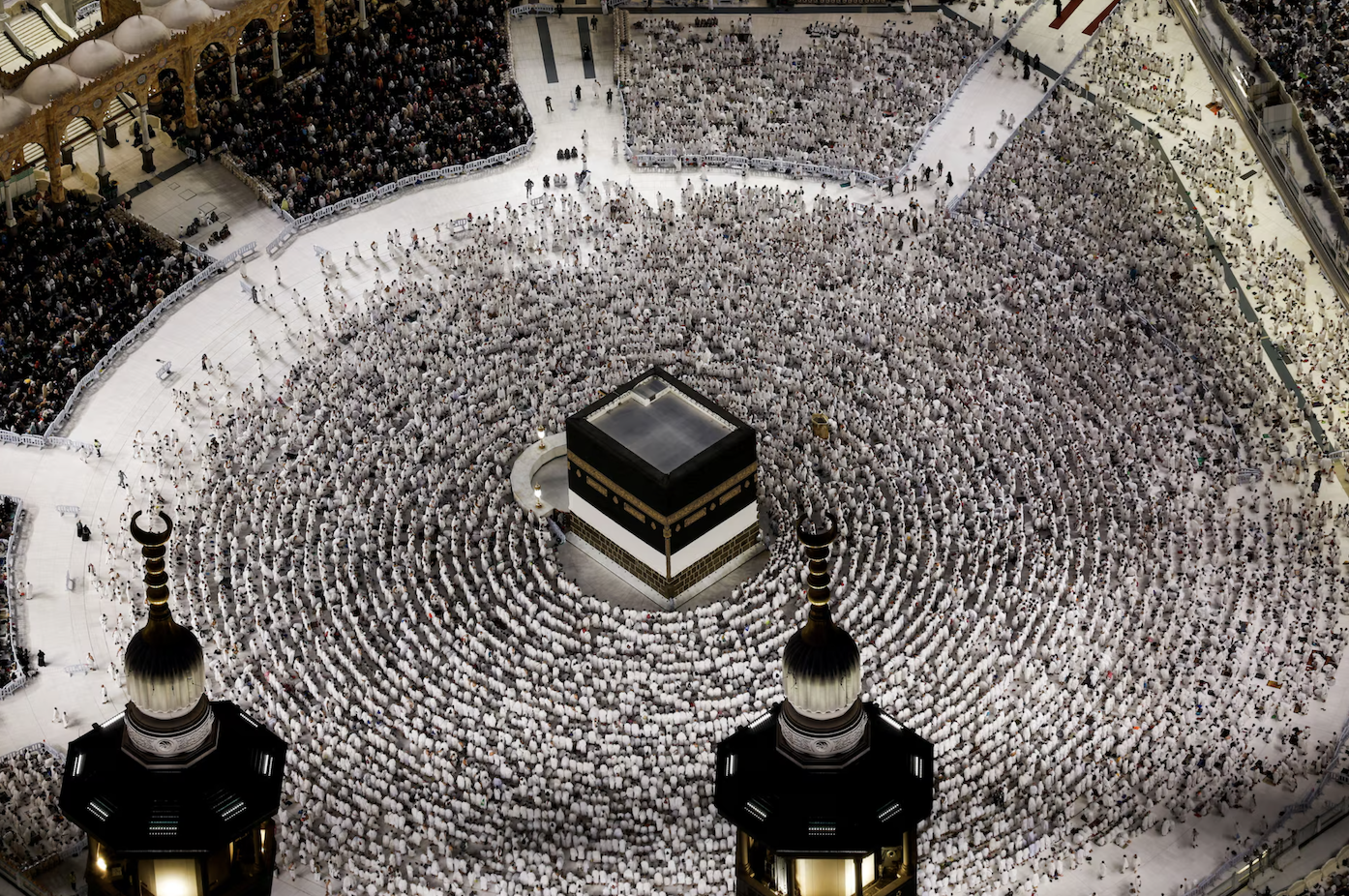
Saudi air defences destroyed a Houthi drone at 6:50 p.m. local time on Tuesday, September 15, as it approached Mecca from the south. There were no casualties. No damage was reported inside the holy precinct. The Kingdom announced the interception in a statement issued in the early hours of Wednesday morning by Major General Turki Al-Malki, spokesperson for the Coalition to Restore Legitimacy in Yemen. Al-Malki described the attempt as a red line. The coalition statement characterised it as “a black mark in the record of violations by the terrorist Houthi militia, considered a deliberate act to inflame the feelings of millions of Muslims.”
Mecca is closed to non-Muslims. It is the destination of the annual Hajj pilgrimage and hosts millions of Umrah visitors each year from every country in the Muslim world. Every Muslim in the world faces the Kaaba at the centre of the city during the five daily prayers. Saudi Arabia has been custodian of Mecca and Medina since 1932, and the protection of both cities is a foundational element of the Saudi state’s religious and political role.
The last comparable attempt was in October 2017, when Saudi air defence forces intercepted a Houthi ballistic missile targeting Mecca over the Al-Wasliya area of Taif province. No casualties were reported on that occasion either. The nine-year interval between the two incidents suggests direct targeting of Mecca has been rare, and the coalition’s language on Wednesday, calling the attempt a red line, matched almost exactly the vocabulary Saudi officials used in 2017.
The context around Tuesday’s incident is different in one important respect. The 2017 launch took place during the earlier phase of the Yemen conflict. The 2026 attempt has come during a broader regional war involving Iran, Israel, and the United States that began on February 28, and against a Saudi security posture that has restructured substantially over the past year. Riyadh signed the Strategic Mutual Defence Agreement with Pakistan in September 2025. It signed the Mecca Joint Defence Agreement with Turkey and Pakistan on August 7, 2026. On August 13, it launched the Multinational Maritime Defense Alliance to protect commercial shipping through the Red Sea and the Bab al-Mandeb Strait. The drone attempt tests this new architecture directly.
The past ten days have produced a sustained series of Houthi attacks that the Kingdom’s defence authorities have been publicly cataloguing. On Friday September 11, the East-West Pipeline was temporarily shut down after being targeted in multiple drone attacks in the Riyadh and Medina regions. The pipeline connects the Eastern Province oil fields to the port of Yanbu on the Red Sea, and its function is to allow Saudi crude to bypass the Strait of Hormuz. Its temporary shutdown, even for a matter of hours, sits at the top end of what Houthi drone attacks have achieved this year. Last week, a separate attack across various towns and cities in the Kingdom left more than 70 people injured, including women and children. On Monday, September 14, ballistic missiles struck civilian areas in Khamis Mushait, Abha, and Taif, injuring thirteen people.
The Mecca attempt is the most recent point in that ten-day sequence. Gulf and Muslim organisations condemned the East-West Pipeline attack over the weekend. Reactions to the Mecca incident are still developing as of Wednesday morning.
Saudi air defence forces have been under sustained pressure through 2026, with attacks arriving from multiple directions across the Kingdom..
Al-Malki’s statement said the coalition reserves the right to respond to the attempt in accordance with international law.


Comments (0)