


In the global competition for outbound Chinese travellers, the field is crowded. Thailand has been their dominant destination for years. Japan has rebuilt its tourism economy around them. The United Arab Emirates has spent the past decade methodically building Chinese-ready infrastructure, from Mandarin-speaking concierges at Dubai luxury hotels to direct flight networks linking Shenzhen and Chengdu to Abu Dhabi. Across Asia, Europe, and the Gulf, governments are competing for the same high-value visitor: the Chinese middle-class traveller looking for somewhere new.
Saudi Arabia has now joined that competition with unusual seriousness. Over the past three years, the Kingdom has built out a coordinated strategy aimed at attracting five million Chinese visitors annually by 2030, more than 35 times the number that visited in 2024. The target is ambitious. The infrastructure being assembled to deliver it suggests Saudi Arabia is not approaching the goal as a marketing exercise but as a structural reshaping of how the country presents itself to one of the most consequential travel markets in the world.
Why China Matters So Much
The Chinese outbound tourism market is, in scale, unlike anything else in global travel. Before the pandemic, more than 150 million Chinese travellers were leaving the country annually, spending over 255 billion US dollars abroad. The recovery has been uneven, but the underlying trajectory is unchanged. China remains the largest single source of outbound tourism on earth, and the demographic now travelling, the post-1990s middle class with disposable income and a growing appetite for destinations beyond the established Asian and European circuits, is precisely the cohort that Saudi Arabia is targeting.
The Chinese traveller of 2026 is also different from the group-tour traveller of a decade ago. They are more likely to travel independently or in small groups, more likely to seek cultural and experiential travel rather than checklist sightseeing, and more likely to prioritise destinations that offer something genuinely unfamiliar. Saudi Arabia, with its combination of pre-Islamic archaeology, desert landscapes, Red Sea coastline, and ultramodern urban developments, fits that profile in ways that few competitor destinations can match. It offers the Chinese visitor something they cannot get in Thailand or Japan: a place that almost nobody they know has been to yet.
The Numbers, So Far
Chinese arrivals to Saudi Arabia reached approximately 140,000 visitors in 2024, making China the Kingdom’s second-largest international tourism source market behind Egypt. That figure is small in absolute terms compared with the volumes that Thailand or Singapore receive, but the growth trajectory has been steep. Visitor numbers have approximately doubled year on year as Saudi Arabia has progressively removed friction from the Chinese travel experience.
The target of five million Chinese visitors annually by 2030 represents a roughly 35-fold expansion of the 2024 base in six years. That is a steep curve, and meeting it will depend on factors that include aviation capacity, hospitality infrastructure, marketing reach, and broader perceptions of the destination among Chinese consumers. The Kingdom’s broader 150 million visitor target by 2030, of which the five million Chinese figure forms part, was already significant before the 2026 regional conflict introduced new variables into the picture. Hitting it on schedule remains an open question. The strategic intent, however, is clear.
The Belt and Road Foundation
The current Saudi-China tourism push did not emerge in isolation. It sits within a much broader bilateral relationship that has been deepening steadily since President Xi Jinping’s visit to Riyadh in December 2022. During that visit, Saudi Arabia and China announced the formal alignment of China’s Belt and Road Initiative with Vision 2030, a strategic framing that has since underpinned cooperation across energy, technology, infrastructure, and tourism.
The most significant tourism-specific outcome of that meeting was Saudi Arabia’s designation as an Approved Destination for Chinese outbound tour groups, a regulatory status that allows Chinese travel agencies to formally market and operate group tours to the Kingdom. The Approved Destination Status framework is administered by the Chinese government and significantly affects the practical accessibility of any destination to the Chinese mass market.
In July 2023, Riyadh’s King Khalid International Airport received Welcome Chinese certification, a global standard developed by the China Tourism Academy that recognises destinations and venues meeting specific requirements for Chinese visitor readiness. The certification covers Mandarin signage, payment system compatibility with Chinese platforms like Alipay and WeChat Pay, and staff training on Chinese cultural preferences. It is, in effect, a passport into the Chinese consumer market for any tourism destination that earns it.
Then in June 2025, China implemented a 30-day visa-free policy for ordinary passport holders from Saudi Arabia, Oman, Kuwait, and Bahrain, joining existing waivers for the United Arab Emirates and Qatar. The policy made visa-free access between China and the entire Gulf Cooperation Council a reality for the first time. A Chinese travel booking platform reported that flight searches from GCC nations to China surged 90 percent on the first day of the rollout, with Saudi Arabia topping the list. Outbound travel from Saudi Arabia to China is now structurally easier than it has ever been. The inbound flow, while not yet operating under a reciprocal visa-free regime, has benefited from a parallel set of streamlined e-visa policies and direct flight expansion designed to lower the practical barriers to Chinese travel into the Kingdom.
Aviation Is the Bottleneck
Every tourism strategy targeting a distant source market eventually meets the same constraint: flights. A destination cannot meaningfully grow Chinese arrivals without sufficient direct air connectivity between Chinese cities and the destination’s primary entry points. The Saudi-China aviation relationship has been expanding accordingly.
China Eastern, China Southern, and other Chinese carriers have progressively added direct routes from major Chinese hubs to Riyadh and Jeddah over the past three years. Saudi carriers, including Saudia and the relatively new Riyadh Air, have signalled intentions to expand their own networks into China as part of the Kingdom’s broader aviation strategy, which includes plans to position Saudi Arabia as a global hub connecting Asia, Europe, and Africa. The new King Salman International Airport in Riyadh, currently under construction and designed to handle 185 million passengers annually by 2050, is being built with this kind of intercontinental flow in mind.
The expansion is real but uneven. The number of direct Chinese flights into Saudi Arabia remains a fraction of those into the UAE, which has long been the established Gulf gateway for Chinese travellers. Closing that gap is one of the most concrete operational challenges Saudi tourism authorities face. Without it, the five million visitor target cannot be reached.
The Destinations Being Built for the Chinese Visitor
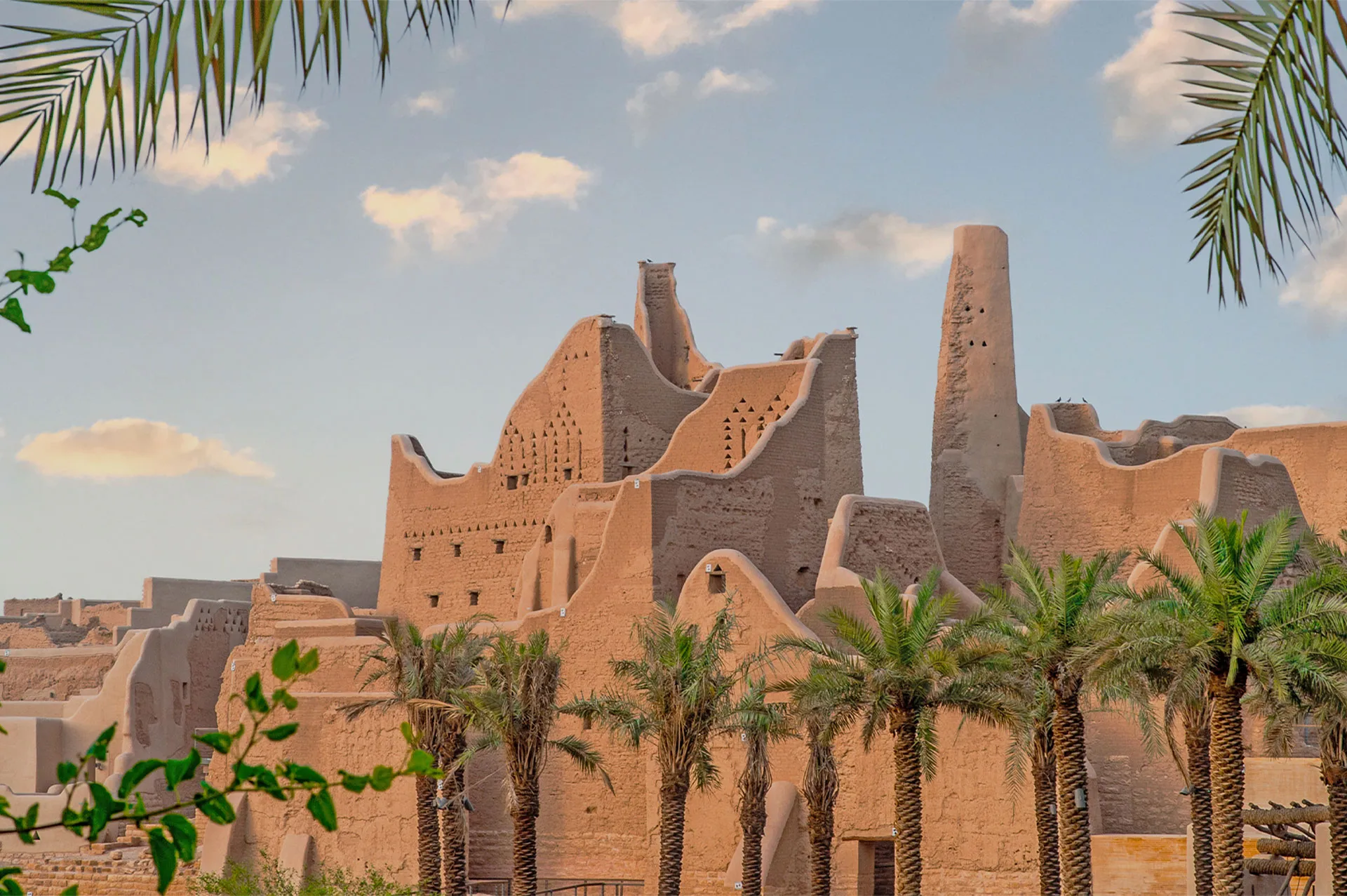
Saudi Arabia’s pitch to the Chinese market is not aimed at the budget traveller. The destinations being developed and marketed most aggressively, AlUla, the Red Sea Project, NEOM, Diriyah, Sindalah Island, are positioned squarely within the luxury and premium experiential segments. This is a deliberate strategic choice. The Chinese outbound market segments that Saudi Arabia is targeting most actively are the upper-middle-class and high-net-worth travellers who prioritise unique destinations, cultural depth, and high-quality service over price.
AlUla in particular has been positioned as a flagship for Chinese visitors. The combination of Hegra’s Nabataean tombs, the Maraya concert hall, and the desert luxury hospitality being developed around the wider region offers a profile that closely matches Chinese premium traveller preferences. The Royal Commission for AlUla has actively cultivated relationships with Chinese tour operators, marketing agencies, and travel media.
The Red Sea Project, which began welcoming guests in 2024, has similarly been built with the international premium leisure traveller in mind. Its regenerative tourism positioning, with restrictive caps on visitor numbers and a high-end resort portfolio, sits naturally alongside Maldives and Seychelles-style aspirational beach destinations that the Chinese market has been consuming at growing volumes. NEOM and its Sindalah island, while still in early operational phases, are being designed for the same audience.
The Cultural Distance Problem
What none of this changes, and what Saudi Arabia will need to manage carefully, is the fact that the Kingdom remains a culturally unfamiliar destination for most Chinese travellers. The country opened to international tourism only in 2019. There is no significant Chinese diaspora in Saudi Arabia of the kind that has helped establish destinations like Singapore or Australia in the Chinese consumer consciousness. Saudi cuisine, while increasingly visible in Chinese culinary media, does not have the established mainstream presence that Japanese or Thai food enjoys. The cultural and religious context, while increasingly accessible to international visitors, requires more contextual framing for Chinese audiences than destinations whose visitor protocols are more intuitive.
Saudi tourism authorities have responded to this by investing significantly in Chinese-language content, cultural orientation materials, and operator training. The visit Saudi platform and broader Vision 2030 marketing infrastructure now includes substantial Mandarin-language presence. Saudi tourism representatives regularly participate in major Chinese travel trade fairs. Tour operators with established Chinese client bases have been recruited as marketing partners.
The structural challenge of building Saudi Arabia’s brand recognition among Chinese consumers from a low base will take longer to resolve than visa policy or flight capacity. It is, in the medium term, the most consequential variable in whether the five million target can be achieved.
What Comes Next
The most recent piece of bilateral tourism architecture, a strategic cooperation framework between the Saudi and Chinese tourism authorities, has been progressively built out across 2025 and 2026. The framework covers regulatory alignment, marketing cooperation, operator training, and information exchange, providing institutional scaffolding for what is intended to become one of the most significant bilateral tourism corridors in global travel.
What it will not do is shield Saudi Arabia from the broader competition for Chinese visitors. The UAE remains the dominant Gulf destination by a significant margin. Thailand, Japan, and Singapore continue to dominate the major Asian competition. Europe has rebuilt its Chinese visitor flows post-pandemic. Every one of these destinations has a longer history with Chinese consumers and a deeper marketing presence than Saudi Arabia. The Kingdom’s challenge is not to displace any of them, but to carve out a meaningful share of a growing market.
The argument Saudi Arabia is making, in effect, is that the Chinese traveller of 2030 will be ready for somewhere they have not been before, and that Saudi Arabia will be ready to receive them. The country was closed for most of its modern history. It is now building, with deliberate strategic intent, the infrastructure to welcome the largest outbound tourism market in the world. Whether the five million target is met on schedule will depend on a complex mix of execution, competition, and the broader regional environment. The direction, and the seriousness of the effort, are no longer in question.
The Chinese tourist is coming. Saudi Arabia is making sure it has somewhere worth visiting when they arrive.
Comments (0)