


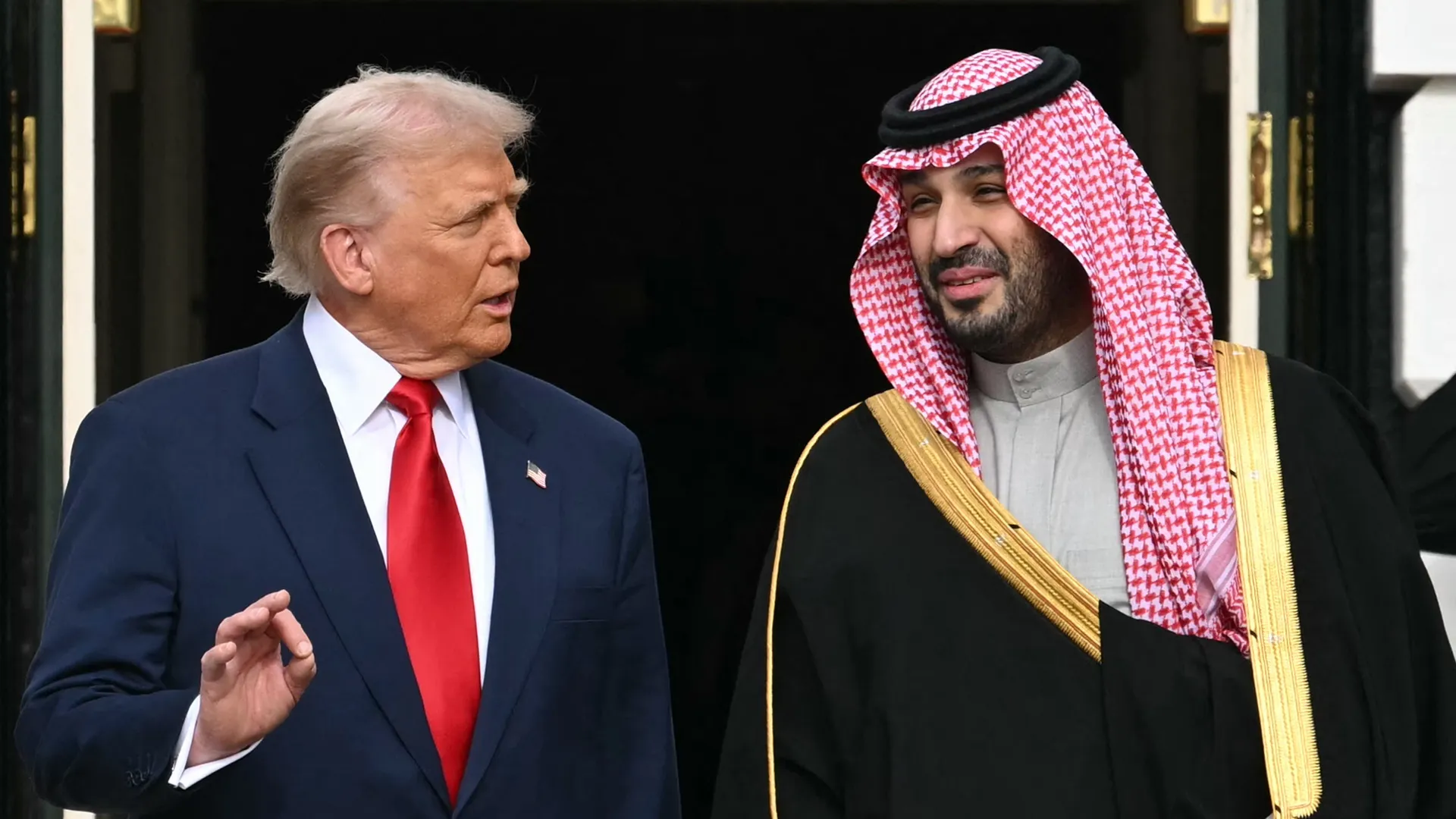
On Wednesday July 22, in a signing that had been telegraphed for months but debated for years, the United States and Saudi Arabia formally concluded a nuclear cooperation agreement that will shape the Kingdom’s energy future and, potentially, the strategic architecture of the Middle East for decades to come. The deal, signed by Saudi Energy Minister Prince Abdulaziz bin Salman and US Energy Secretary Chris Wright, marks the culmination of a diplomatic process that began under previous US administrations and became one of the most complex bilateral negotiations of the past decade.
The Trump administration described the deal as an accord that will “reinforce global nonproliferation standards” and “create jobs in the United States.” Congressional critics called it something else entirely. The two framings represent the real question at the heart of this story. Reasonable people can disagree about the answer, and understanding the agreement requires taking both seriously.
What a 123 Agreement Actually Is
The agreement signed on Wednesday is known as a “123 agreement,” a name that comes from Section 123 of the US Atomic Energy Act of 1954. Under US law, no American company can export nuclear technology, materials, or equipment to another country without such an agreement first being in place. The framework sets out the terms of nuclear cooperation between the United States and its partner, including safety protocols, safeguards, and nonproliferation commitments.
The United States currently has 123 agreements with more than twenty countries and organisations, including the United Kingdom, Japan, South Korea, the United Arab Emirates, and the European Atomic Energy Community. The vast majority of these are unremarkable pieces of bilateral machinery. They exist because civil nuclear cooperation requires them. They are renegotiated periodically as technologies and priorities evolve. Their signing rarely makes headlines.
The Saudi agreement is different for a specific reason. Recent US 123 agreements, particularly the 2009 accord with the United Arab Emirates, have included what nonproliferation experts refer to as the “gold standard” clause: a binding commitment by the partner country not to enrich uranium or reprocess spent nuclear fuel on its own soil. Both processes, uranium enrichment and reprocessing of spent fuel, are the primary technological pathways by which a civilian nuclear programme could theoretically be diverted toward the production of nuclear weapons. The UAE accepted the gold standard in 2009 and has held to it since. It has been widely regarded as the benchmark for how the United States should structure future civil nuclear cooperation in the region.
The Saudi agreement, according to reporting from the Associated Press, the Washington Post, CNN, and other US news organisations that reviewed the deal, does not include a gold standard clause. Instead, it opens a pathway for uranium enrichment to eventually take place on Saudi soil, subject to additional safeguards that the two governments will negotiate. The Wall Street Journal reported that one option under discussion would involve a “black box” enrichment facility located in Saudi Arabia but operated by American companies. The bilateral safeguards agreement signed alongside the main 123 deal is intended to address the additional monitoring requirements this arrangement would entail.
This is the substantive departure from the gold standard, and it is the point on which the entire debate about the deal turns.
The Saudi Energy Rationale
The Kingdom’s interest in nuclear energy is not new, and it is grounded in energy security logic that is largely independent of the political controversy the agreement has generated in Washington.
Saudi Arabia is the world’s largest oil exporter, but it also burns a significant portion of its own oil and gas domestically to generate electricity and desalinate water. This is inefficient, expensive at the margin, and constrains the volume of hydrocarbons available for export. As domestic electricity demand grows, driven by population growth, industrialisation, and rising air-conditioning loads through longer and hotter summers, the pressure to diversify the energy mix has intensified.
Under Vision 2030, the Saudi Kingdom has targeted 50 percent of electricity generation from clean sources by 2030 and net-zero greenhouse gas emissions by 2060. Renewable capacity has grown substantially, with major solar and wind projects operating in Sakaka, Dumat Al-Jandal, and elsewhere. But the intermittency of solar and wind, and the sheer scale of Saudi Arabia’s projected electricity demand, has consistently pointed nuclear power toward a role in the long-term energy mix.
The Saudi National Atomic Energy Project, approved by the Kingdom’s cabinet in 2017, is structured around three pillars: large-scale reactors, small modular reactors, and the domestic nuclear fuel cycle including uranium exploration. The Kingdom has established the King Abdullah City for Atomic and Renewable Energy to oversee treaties and strategy, and the Saudi Nuclear Energy Holding Company to develop and operate the planned plants. Saudi Arabia has stated a target of 17 gigawatts of nuclear capacity by 2040, which if achieved would be one of the larger civil nuclear programmes in the world.
Small modular reactors, still an emerging technology globally, are a particular focus for the Saudi programme because of their potential dual applications for electricity and desalination. The Kingdom’s water security depends on desalination at a scale that few other countries face, and nuclear-powered desalination has been part of Saudi long-term planning since the 2000s.
The domestic uranium fuel cycle question is where energy strategy intersects with national sovereignty and, in the view of critics, with proliferation risk. Saudi Arabia has substantial uranium reserves in its territory. The Kingdom has consistently argued that developing domestic enrichment capability would be an economic and strategic complement to a large civilian reactor fleet, allowing it to fuel its own reactors rather than importing enriched uranium from foreign suppliers.
The Political and Nonproliferation Concerns
The critical view of the agreement, articulated most prominently by Democratic lawmakers and independent nonproliferation experts, is that opening a pathway to Saudi enrichment sets a dangerous precedent and could contribute to broader nuclear proliferation across the Middle East.
Senator Edward Markey of Massachusetts, one of the most consistent voices on nonproliferation in the US Congress, argued that the deal represents “potentially enabling nuclear proliferation in Saudi Arabia and igniting an arms race in the region.” Representative Brad Sherman, a Democrat, made a sharper argument in a House Foreign Affairs Committee hearing on Wednesday. Sherman noted that the US military is currently at war with Iran over Iranian uranium enrichment, and questioned the coherence of prohibiting one country from doing what the United States has just formally authorised another country to move toward.
Henry Sokolski of the Nonproliferation Policy Education Center, an independent research organisation focused on nuclear weapons issues, raised a related concern. If Saudi Arabia is permitted to develop enrichment under a US-sanctioned framework, what basis remains for denying similar arrangements to the United Arab Emirates, Turkey, or Egypt? The gold standard, if it is abandoned for Saudi Arabia, is difficult to maintain for anyone else.
These are serious concerns raised by experienced voices in the field. They deserve to be weighed alongside the agreement’s stated benefits.
The Trump administration and the Saudi government have argued that the deal’s specific safeguards, including the bilateral safeguards agreement, the involvement of US companies in any Saudi enrichment activity, and continued Saudi International Atomic Energy Agency inspections, are sufficient to prevent diversion toward weapons. Whether they are sufficient is precisely what nonproliferation experts and lawmakers will debate over the next ninety days.
What Happens Next
Under US law, Congress now has ninety days of continuous session to review the agreement. During that window, either chamber can pass a joint resolution disapproving the deal. If Congress does not act, the agreement enters into force automatically at the end of the ninety-day window.
The politics of that congressional review are already visible. Democratic lawmakers, joined by some Republicans who have historically pushed for the gold standard, are expected to press hard for hearings, additional safeguards, and public disclosure of the specific enrichment provisions. Whether opposition can coalesce into a joint resolution is a different question. The White House has substantial procedural tools available to it, and Congress has never successfully blocked a 123 agreement through disapproval resolution in the fifty years since the current review framework was established.
For Saudi Arabia, the immediate practical implications are commercial. The agreement clears the way for US firms including Westinghouse, one of the world’s largest reactor manufacturers, to bid on the Saudi civil nuclear procurement. The Kingdom has previously indicated that it is considering vendors from the United States, South Korea, China, and Russia for its first large-scale reactor. The 123 agreement makes American participation legally possible for the first time and is likely to shift the competitive calculus.
The reactors themselves will take years to build. The first Saudi nuclear plant is unlikely to generate electricity before the early 2030s, even under optimistic timelines. The enrichment question, and any physical enrichment facility that might eventually be built under the terms of the agreement, is even further out.
The Broader Story
The signing on Wednesday represents the operational conclusion of a process that has been underway for more than two US administrations. The Biden administration engaged with Saudi Arabia extensively on a 123 agreement as part of a broader normalisation package that was to include Saudi-Israeli diplomatic relations. That normalisation effort was interrupted by the events of October 2023 and the regional conflicts that followed. The Trump administration has now delinked the nuclear agreement from any explicit normalisation requirement, which is one of the reasons the deal has come together relatively quickly since the November 2025 MBS visit to Washington.
For Saudi Arabia, the agreement is the closing of a decade-long diplomatic negotiation and the opening of a new energy chapter. Nuclear power will not solve every challenge in the Kingdom’s energy transition, and it is not the largest single component of Vision 2030’s clean energy targets. But it is a strategically significant one, and the United States has now formally partnered in it. For the American nuclear industry, which has spent two decades in relative commercial decline, the deal is one of the most substantial export opportunities in a generation.
Whether the specific terms of the enrichment provisions will hold up to Congressional and international scrutiny is the story of the next ninety days. Whether the broader Saudi civil nuclear programme succeeds on its stated timeline is the story of the next fifteen years. Both stories are now, definitively, underway.




Comments (0)