
Yasir Al-Rumayyan does not raise his voice. Speaking to a packed auditorium at the Faena Hotel on a balmy March morning, the governor of Saudi Arabia’s Public Investment Fund (PIF) delivered his message with the quiet authority of someone who knows his audience is listening. “We measure returns not in quarters, but in decades,” he said, pausing just long enough for the weight of it to settle. In a world where investment horizons have shortened to the span of an earnings call, this was less a boast than a declaration of intent. Saudi Arabia, Al-Rumayyan was making clear, is done proving it can spend. Now it wants to show it can shape.
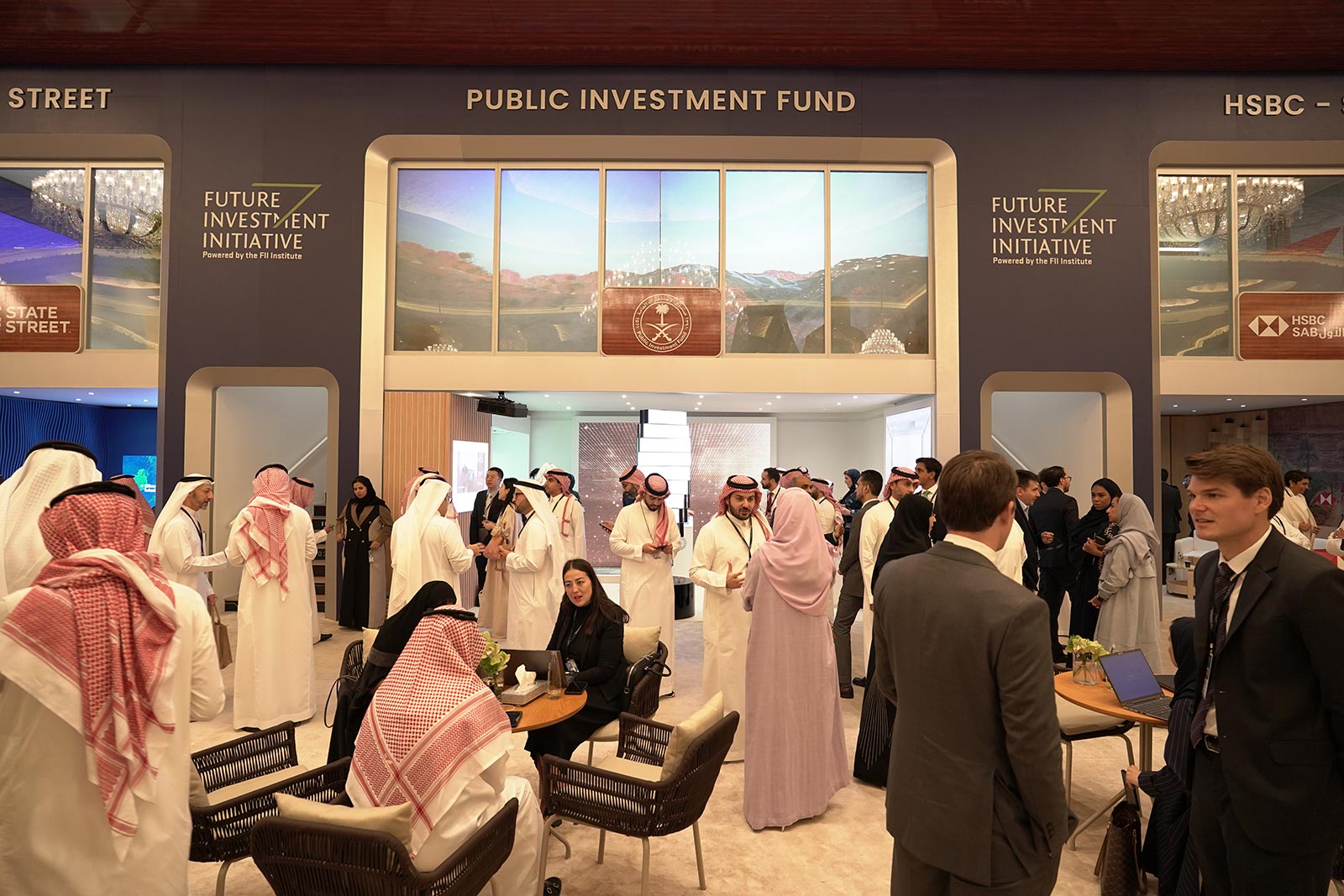
The fourth edition of FII PRIORITY Miami, held from 25 to 27 March under the banner “Capital in Motion”, brought together more than 1,500 leaders from finance, technology and government across the Americas, Europe, Africa and Asia. Organised by the Future Investment Initiative Institute – the Riyadh-based think tank backed by PIF – the summit was billed as a forum for discussing investment resilience in uncertain times. But beneath the polished panels and keynote speeches, something more substantive was at play: a recalibration of how Saudi capital positions itself on the global stage.
For three days, delegates moved between sessions on AI infrastructure, stablecoins, critical minerals, private equity and the growth potential of the Global South. Deals were announced, including a partnership between PIF-backed HUMAIN and US AI firm Turing to develop an enterprise AI agent marketplace. Publications on digital assets and tokenised finance were launched, citing projections of a $30tn market by 2030. And Saudi Finance Minister Mohammed al-Jadaan took the stage to underscore the Kingdom’s economic resilience, even as he cautioned that geopolitical shocks could rival the disruption of the pandemic.
Yet the real story lay not in the transactions, but in the subtext. Saudi Arabia, home to one of the world’s largest sovereign wealth funds, is entering what Al-Rumayyan described as a new strategic phase. After years of deploying its $925bn war chest on domestic mega-projects – from NEOM to the Red Sea Project – PIF is pivoting towards co-investment and third-party capital. It wants partners, not just projects. This is capital as convener, not just cheque-writer.
From chequebook to cornerstone
The shift has been building for some time. PIF’s 2021-2025 strategy delivered outsized returns even amid global turbulence, but it also exposed the limits of unilateral spending. Mega-projects require not just money, but sustained ecosystems of suppliers, regulators and talent. As oil prices fluctuate and regional tensions simmer, Saudi leaders have begun emphasising a more collaborative model.
In Miami, this crystallised. Al-Rumayyan told his audience that PIF’s forthcoming 2026-2030 roadmap would prioritise attracting external investors into its portfolio companies. The fund, he added, remains committed to its domestic transformation agenda, but it will no longer carry every load alone. This is a pragmatic evolution: Saudi Arabia has the balance sheet to anchor deals, but it needs the world’s expertise to scale them.
The HUMAIN-Turing partnership offered a case study. HUMAIN, launched last year as Saudi Arabia’s national AI flagship, aims to build sovereign AI capabilities while exporting services globally. The deal with Turing – announced on day one – will create what the companies called the world’s first enterprise AI agent marketplace, hosted on HUMAIN’s ONE platform. For observers, it was a signal of ambition: Saudi Arabia is not content to license foreign AI. It wants to own the infrastructure and set the commercial terms.
The announcement landed amid broader summit discussions on AI’s role in everything from healthcare to logistics – sectors where PIF has already committed billions.
Resilience amid headwinds
Timing lent the event added resonance. The summit unfolded against a backdrop of renewed Middle East tensions, supply chain strains and questions over energy transition timelines. Oil hovered above $80 a barrel, but markets remained jittery. Into this stepped al-Jadaan, whose midday address blended caution with conviction. “Our economy is resilient and able to manage crises,” he said. Yet he warned that fragmentation – be it trade wars or regional conflicts – posed the greatest threat.
Al-Jadaan’s remarks echoed a broader Saudi narrative: stability as a competitive edge. The Kingdom has diversified its revenue streams, with non-oil GDP growth outpacing the region. PIF’s portfolio now spans aviation (through Saudi Airlines), gaming (via Savvy Games Group) and sports (Newcastle United). Miami allowed officials to frame these bets not as diversification for its own sake, but as deliberate positioning for a multipolar world.
The summit’s geography amplified the message. Miami – gateway between North and South America – served as a deliberate counterpoint to Davos or Singapore. Sessions on Latin America’s infrastructure needs, Africa’s mineral wealth and US-Gulf technology ties underscored Saudi Arabia’s interest in emerging markets.
A platform for power
What emerged, then, was less a conference than a convening platform. FII PRIORITY has grown into Saudi Arabia’s answer to the World Economic Forum: a place where the Kingdom doesn’t just attend, but sets the agenda. Past editions in London, Tokyo and New York built the brand; Miami consolidated it. Attendance topped previous years, with CEOs from BlackRock, Microsoft and regional heavyweights mingling with Gulf ministers and Latin American finance chiefs.
This soft power matters. Saudi Arabia once exported oil; now it exports capital and ideas. The slogan circulating in summit materials – that the Kingdom once brought Saudi to the world, and now brings the world to Saudi – captures the transition. PIF’s LinkedIn post from the event struck the same note: “Capital in motion shapes the future.”
Critics might see this as rebranding amid scrutiny over allegations of “greenwashing” and the like. Supporters point to the results: PIF’s assets under management have tripled since 2015, delivering returns that rival peers like Norway’s fund. Miami was a reminder that substance underpins the spectacle.
As delegates departed into the humid Miami dusk, the question lingered: can Saudi Arabia sustain this momentum? PIF faces domestic pressures alongside global ones. Yet al-Rumayyan’s decades-long horizon offers a riposte. This is not a sprint.
For now, FII PRIORITY Miami has done its job. It positioned Saudi capital as patient, strategic and open for business. In an era of short-termism, that may be the most powerful move of all.
Comments (0)