


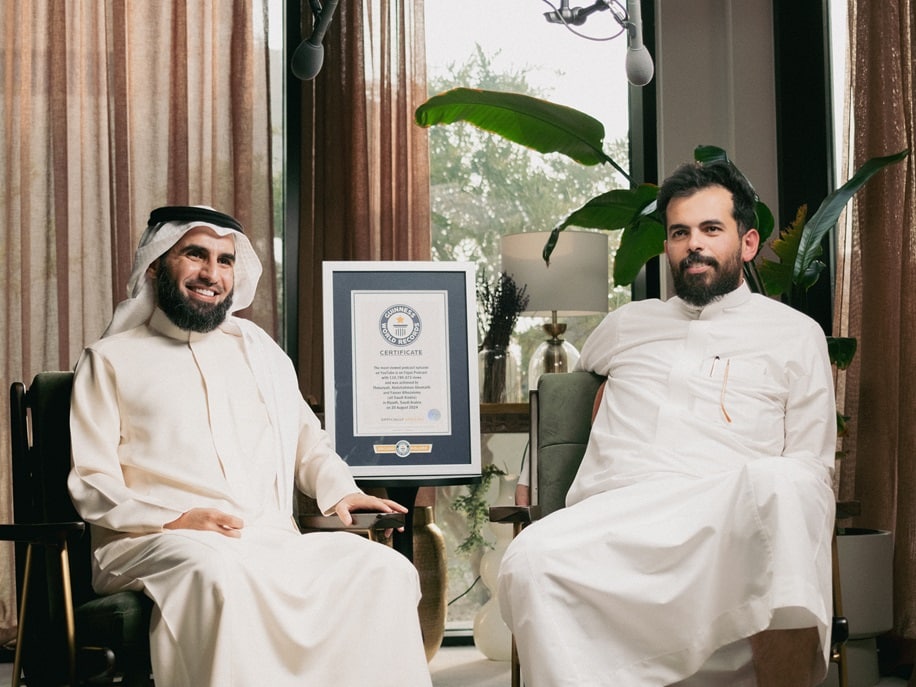
In August 2024, a Guinness World Record fell to a podcast episode most of the world had never heard of. The episode, titled “Secrets to Thriving Relationships,” had been released in November 2022 by a Saudi Arabian media company called Thmanyah. By the time Guinness certified the record, it had accumulated 113 million views on YouTube, surpassing the previous record holder: Joe Rogan’s interview with Elon Musk, which had taken five years to reach 68 million views.
The Thmanyah episode did it in under two years. Seventy-four percent of those viewers came from outside Saudi Arabia. Twenty-one percent watched with English subtitles.
The record is a useful starting point for understanding what Thmanyah is, but it barely scratches the surface of what the company has built.
A Question Asked in Riyadh in 2016
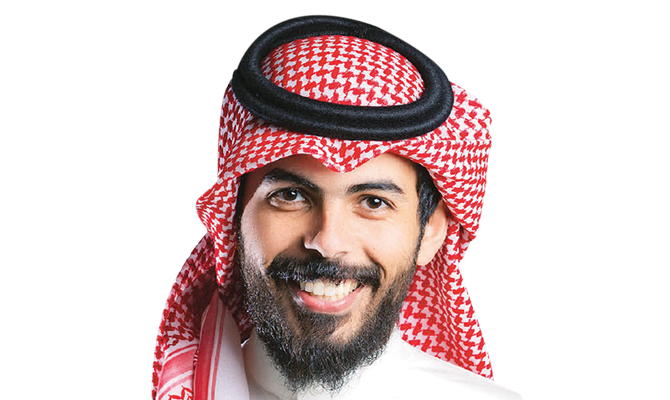
Thmanyah, which means “eight” in Arabic, was founded in Riyadh in September 2016 by Abdulrahman Abumalih. The founding question, as Thmanyah has told it since, was direct: why does a gulf of light years separate Arabic journalism from its Western counterpart? It was not a rhetorical question. It was a business plan.
Arabic is the fifth most spoken language in the world, with around 400 million native speakers. It is the language of the Quran, of a literary tradition stretching back more than a millennium, and of twenty-two countries. Yet at the time Thmanyah launched, Arabic content represented roughly one percent of global podcast output. The gap between the scale of the audience and the quality and quantity of content being produced for it was, by any measure, enormous.
Abumalih’s answer was to start a podcast. Fnjan, which translates to “small Arabic coffee cup,” launched as Thmanyah’s flagship show: long-form conversations with influential Arab guests, recorded with the warmth and intimacy the name implies. The format was not novel by global standards. In the Arab world in 2016, it was almost entirely new.
Building the Flagship
Fnjan is now one of the most listened-to podcasts in the Arab world. With more than 350 episodes produced, each averaging over one million views, the show has built a following across the Gulf, the Levant, and North Africa. Its guests have ranged across media, culture, business, religion, and history. Its tone is unhurried: most episodes run for several hours, a format that runs counter to the conventional wisdom about digital attention spans but appears to work precisely because it does not feel compressed.
The record-breaking episode featured Yasser Al Hazimi, a relationship and communication coach, in a three-hour conversation covering toxic relationships, self-love, bullying, and conflict resolution. Guinness described its approach as direct and no-nonsense, making advice feel accessible rather than academic. The episode’s themes were universal enough to cross language lines, which explains the 21 percent of viewers who watched in English subtitle mode: people who could not follow the Arabic but found the content worth the effort of reading their way through three hours of subtitles.
That is an unusual achievement for any content in any language.
Beyond the Flagship
Thmanyah was never only Fnjan. The company has built a fleet of shows covering different territories of Saudi and Arab life. Swalif Business tells the stories of entrepreneurs and founders. Socrates, acquired by Thmanyah in 2021 in what was reported as the largest podcast acquisition deal in MENA history, documents Saudi Arabia’s Vision 2030 transformation through long-form interviews with senior public officials. Things That Changed Us explores the ideas, events, and inventions that have shaped contemporary Arab society. Alfajr is a daily news briefing in the mould of The Daily from the New York Times, offering a morning roundup for Arabic-speaking audiences.
Across its network, Thmanyah has accumulated more than 351 million listeners and viewers. It has won seven awards across the MENA region, including two consecutive awards from the Saudi Ministry of Media. It is also, separately, the largest producer of documentary films in Saudi Arabia, with more than 90 documentaries and short films covering subjects ranging from the life of Malcolm X to the history of Edward Said to the kidnapping of a Saudi consul in Iran.
The breadth of the content operation is what distinguishes Thmanyah from a podcast studio. It is functioning more like a media company in the broadest sense: producing journalism, documentary, and long-form conversation across multiple formats, all in Arabic, all aimed at an audience that had been significantly underserved before it existed.
The SRMG Deal and What It Meant
In July 2021, the Saudi Research and Media Group acquired a 51 percent controlling stake in Thmanyah for SAR 33.3 million, approximately nine million US dollars at the time. SRMG is one of the largest media conglomerates in the Arab world, owning more than thirty outlets including Asharq Al-Awsat, Asharq News, Arab News, and Billboard Arabia. The acquisition placed Thmanyah inside a much larger media infrastructure while, at least nominally, preserving its editorial identity.
The deal attracted attention because SRMG’s ownership structure has historically placed it in close proximity to the Saudi state. Some analysts, including researchers at the Carnegie Endowment, have noted the questions this raises about editorial independence, particularly for a show like Socrates whose entire premise involves long-form interviews with Saudi government officials about Vision 2030. The show’s critics have pointed out that it functions in part as an extended platform for state messaging, even if the conversations themselves are substantive and detailed.
Thmanyah and Abumalih have described the SRMG acquisition as an enabling move: access to resources, distribution infrastructure, and reach that an independent company could not build on its own. That framing is plausible given the scale of what followed. What the deal unambiguously did was accelerate Thmanyah’s growth and cement its position as the dominant Arabic-language podcast network in the region.
The Pivot to Media Technology
In 2024, Thmanyah announced a significant strategic shift, describing itself no longer as a media company but as a media technology company. The pivot centred on building infrastructure for Arabic content creators rather than simply producing content itself.
The Radio Thmanyah app launched as a dedicated podcast listening platform, allowing users to import existing podcast libraries while giving creators hosting, marketing, and monetisation tools. Thmanyah.com was relaunched as a destination for Arabic-language newsletters and articles, modelled loosely on Substack. A creator ad network was established to connect Saudi and Arab content producers with advertisers, addressing one of the persistent structural weaknesses of Arabic-language digital media: the difficulty of monetising an Arabic-speaking audience that global advertising platforms have historically undervalued.
The reasoning is straightforward. If Arabic represents one percent of global podcast content despite five percent of the world’s population speaking it as a first language, the problem is not only a lack of Arabic creators. It is a lack of tools, platforms, and economic infrastructure built for those creators. Thmanyah, having spent eight years building content, is now trying to build the ecosystem around it.
Why It Matters
The Thmanyah story is interesting as a business story, but it is more interesting as a cultural one. What Abumalih set out to do in 2016 was not simply build a successful company. It was to demonstrate that Arabic-language media could be excellent, that the gap between Arabic and Western journalism was a product of under-investment and under-ambition rather than anything inherent to the language or its audience, and that a Saudi company could lead that correction.
The Guinness record, taken on its own, is a piece of trivia. Set in context, it is evidence of something more significant: that an Arabic-language podcast episode, produced in Riyadh, on the subject of human relationships, could reach more people on YouTube than anything Joe Rogan had ever made. The 74 percent of viewers who watched from outside Saudi Arabia were not doing so because the content was Saudi. They were doing so because it was good.
That, more than any acquisition figure or subscriber count, is what Thmanyah has been trying to prove since the beginning.




Comments (0)