


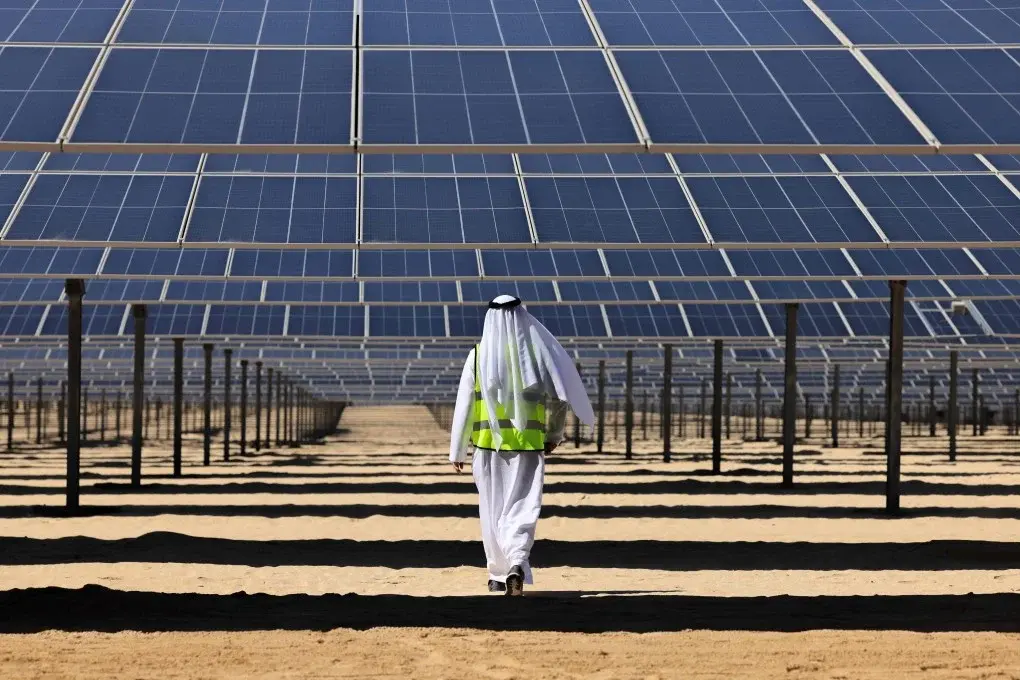
For decades, Saudi Arabia has achieved global prominence as the world’s largest crude exporter and a key energy producer. Its standing has been powered by oil, and the Kingdom built its strength on hydrocarbons.
But, as energy demand patterns shift and governments prioritize cleaner electricity and lower-carbon industry, Saudi Arabia is pursuing a more ambitious mission: not to step away from energy leadership, but to redefine it by becoming a major producer of renewable power and green hydrogen.
At the center of this shift is Vision 2030, Saudi Arabia’s economic diversification strategy.
The Kingdom’s plan combines large-scale renewable-energy deployment with industrial development designed to reduce dependence on oil for domestic power generation and to create new sectors that can power future growth.
Renewable energy is therefore treated as an economic necessity and one that supports energy security, competitiveness, and job creation.
That direction aligns closely with the Saudi Green Initiative launched in 2021, which sets a major target of generating 50 percent of Saudi electricity from renewable sources by 2030.
For a country long reliant on oil and natural gas to meet power needs, especially during intense summer demand, this is a structural change to the national energy mix. If achieved, it would place Saudi Arabia among the world’s most important renewable markets while transforming how electricity is produced and consumed inside the Kingdom.
The case for renewables is also practical and economic. Saudi Arabia has historically burned domestic oil to generate electricity, meaning each barrel used at home is a barrel that cannot be exported. Moving electricity production toward solar and wind can therefore free up hydrocarbons for export while cutting emissions and improving efficiency.
Solar energy is also expected to be crucial for Saudi Arabia’s renewable growth. The Kingdom benefits from some of the highest solar irradiation levels on Earth and has the land and resource conditions to develop utility-scale projects at competitive costs.
Meanwhile, wind power offers diversification and grid stability. While solar dominates attention, several Saudi regions have meaningful wind resources that can support large-scale wind farms. Combining solar and wind helps balance variability in renewable output, strengthening overall reliability and making the future power mix more resilient.
Therefore, the Kingdom is positioning renewable power as the engine behind new industries, most notably green hydrogen. Produced through electrolysis powered by renewables, green hydrogen can be used as a fuel, industrial feedstock, or energy-storage medium without direct carbon emissions.
Unlike electricity alone, hydrogen can be transported, enabling countries with abundant renewable resources to export clean energy to markets that need low-carbon alternatives.
Saudi Arabia’s ambition in this area is exemplified by the NEOM Green Hydrogen Project in the northwest of the Kingdom. Built on renewable power inputs from
Renewables also fit tightly into Saudi Arabia’s wider industrial transformation under Vision 2030.
Mega-projects such as NEOM are designed to function as testing grounds for next-generation systems, renewable grids, hydrogen production, energy storage, and advanced management technologies, helping translate innovation into scalable national practice.
Saudi Arabia’s renewable-energy trajectory can be best understood as three linked goals: transforming domestic electricity, building global leadership in green hydrogen, and creating new industries that extend prosperity beyond oil.
Comments (0)